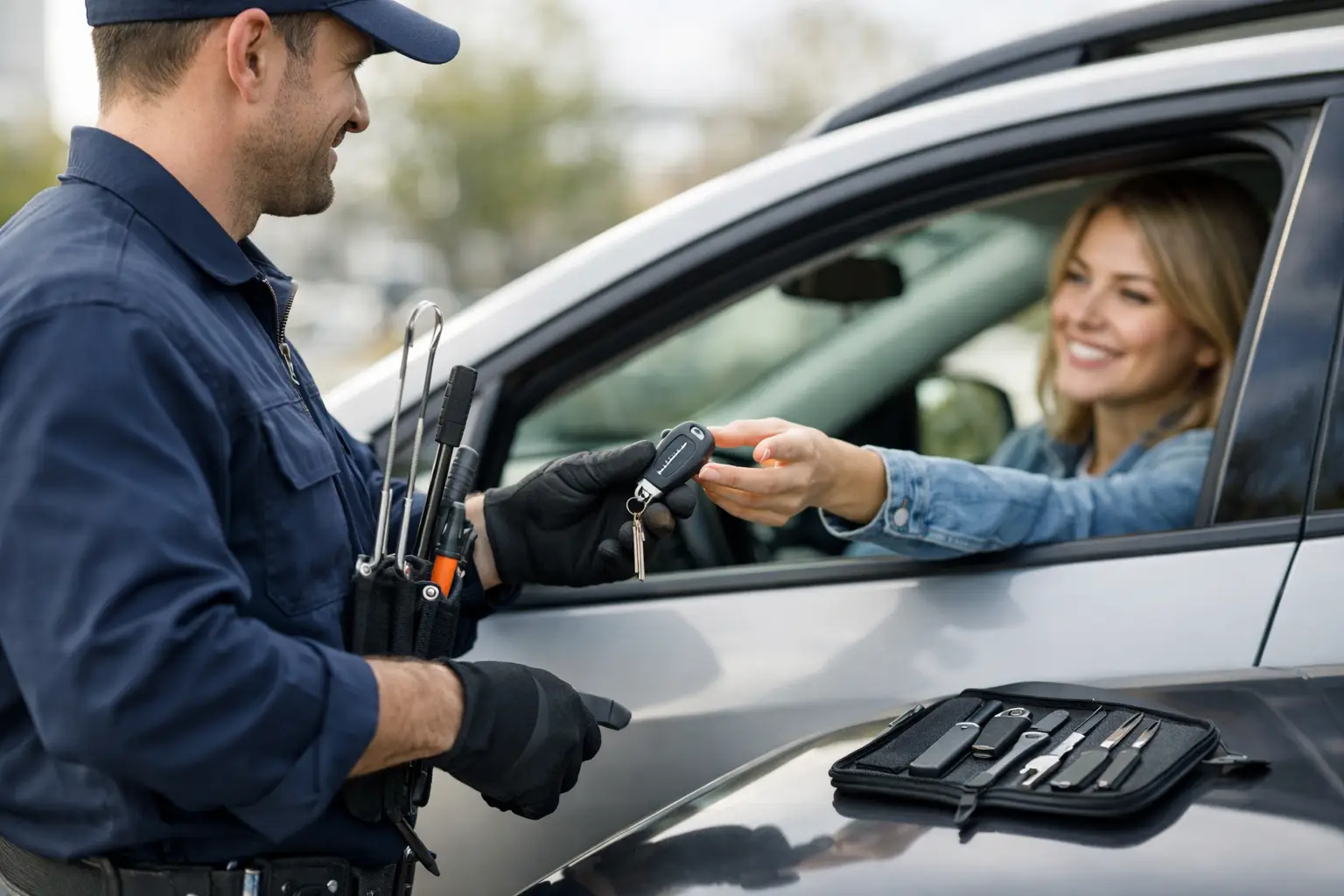
Being locked out is rarely convenient. It happens in a dark parking lot after work, outside your home with groceries in hand, or when a tenant calls about a door that will not open. In that moment, a lockout service review can help you separate a legitimate local professional from a provider that treats an urgent call as a chance to inflate the bill.
Fast help matters, but speed alone is not a standard for quality. A reliable locksmith should arrive prepared, identify the problem clearly, protect your property, and explain the cost before work begins. That is the service standard homeowners, drivers, landlords, and business owners should expect.
What a Lockout Service Review Should Actually Tell You
A five-star rating gets attention, but the useful part of a review is usually in the details. Look beyond broad comments such as “great service” and “fast response.” Those remarks are positive, but they do not tell you whether the locksmith was transparent, skilled, or respectful of the customer’s property.
The strongest reviews describe a specific situation: a customer locked out of a house late at night, a key broken in a commercial door, a vehicle lockout in bad weather, or a tenant turnover that required immediate rekeying. Then they explain what the locksmith did. Did the technician communicate an arrival window? Was the price discussed upfront? Did the work avoid unnecessary damage? Did the customer feel safe once the job was done?
Patterns matter more than one glowing comment or one frustrated complaint. A business with repeated feedback about honest pricing, professional conduct, clean workmanship, and prompt arrival is showing you how it handles pressure. That is more useful than a single rating number.
Speed Is Valuable, but It Is Not the Whole Job
For emergency lockouts, response time is a real concern. If you are stranded outside a vehicle or unable to secure your home, waiting hours is not acceptable. A local mobile locksmith should provide a realistic estimate and update you if traffic, weather, or an earlier emergency call affects arrival.
Still, be cautious of promises that sound absolute. No provider can control every road closure, storm, or service call. A trustworthy company will give you a reasonable timeframe rather than promising an impossible arrival time simply to win the job.
Once on site, the technician should assess the lock before reaching for tools. Many standard lockouts can be handled without drilling or replacing the lock. In some cases, though, drilling is necessary – for example, when a lock is severely damaged, a high-security cylinder has failed, or a safe mechanism cannot be opened through normal methods. The difference is whether the locksmith explains why that step is needed before proceeding.
Check Credentials Before You Share Access
A lockout call requires trust. You may be standing at your home, workplace, rental property, or vehicle with a person who is about to gain access. That is why licensing, insurance, and professional identification are not minor details.
Ask whether the company is licensed and insured, especially when the job involves a residence, business, restricted area, or expensive hardware. A professional locksmith should also verify that you have the right to enter the property. That may mean checking identification, confirming a lease, contacting a property manager, or verifying vehicle ownership. While it can feel inconvenient during an emergency, ownership verification protects you and your property.
A legitimate provider should be able to explain who is coming, what service is being dispatched, and what information they need from you. Vague answers, evasive communication, or pressure to provide payment before basic questions are answered are reasons to pause.
Pricing Should Be Clear Before the Work Starts
Locksmith pricing depends on the situation. A straightforward daytime house lockout is not priced the same as an after-hours commercial emergency, a broken key extraction, or a lock that requires replacement. Travel distance, hardware type, labor time, and emergency timing can all affect the total.
That does not excuse surprise charges. Before authorizing work, ask for an estimate that includes the service call, labor, after-hours fees if applicable, and likely hardware costs. If the technician finds a new issue after arriving, they should explain the change and get approval before adding work.
Be wary of unusually low advertised prices that do not include dispatch or labor. Those offers can turn into a much larger bill once the technician arrives. Honest pricing does not always mean the lowest price. It means you understand what you are paying for and why.
Property Care Separates a Locksmith From a Quick Fix
Getting back inside is only part of the job. Your door, frame, lock, weatherstripping, vehicle trim, and security hardware should be treated with care. A rushed or poorly trained technician can leave marks, bend components, damage a lock cylinder, or create a door alignment problem that costs more to correct later.
Ask how the provider approaches non-destructive entry. An experienced locksmith will generally try the least invasive solution first when conditions allow. After access is restored, they should test the lock and door operation. If a key, latch, strike plate, or cylinder caused the lockout, they should tell you what failed and whether a repair or replacement is advisable.
For landlords and property managers, this matters even more. A lockout may reveal a worn lock, loose deadbolt, damaged panic bar, or entry door that no longer latches correctly. Restoring access without addressing the underlying security issue can lead to another emergency call later.
Warning Signs in a Lockout Service Review
A review does not need to be perfect to be credible. Real businesses occasionally face delays, misunderstandings, or difficult jobs. What matters is how those situations are handled. Watch for repeated reports of the same problems, especially when the company does not appear to resolve them.
Be cautious if reviews repeatedly mention:
- A quoted price that changed dramatically on arrival
- Pressure to drill or replace a lock without a clear explanation
- Damage to doors, locks, or vehicles that was not addressed
- Poor communication about delays, fees, or the work performed
- A technician who did not verify ownership before granting access
One complaint may reflect an unusual situation. A consistent pattern is different. Read recent reviews as well as older ones, since service quality, staffing, and business practices can change over time.
The Right Questions to Ask During an Emergency
You do not need to become a lock expert before making a call. A few direct questions can give you the information needed to make a safer decision. Ask whether the company handles your type of lockout, whether it has an estimated arrival window, and whether there are after-hours or service-call fees.
Also ask whether the technician will provide a price range before starting work and whether they are licensed and insured. If you are calling for a business, ask whether the company can handle commercial hardware such as panic bars, electronic locks, restricted key systems, or damaged storefront doors. For a home or rental, ask whether rekeying is available if keys are lost or stolen.
The answers should be straightforward. You should not need to chase down basic pricing information or guess whether the provider is qualified for the job.
When a Lockout Should Become a Security Upgrade
Not every lockout is an isolated inconvenience. If keys were stolen, a former tenant may still have a copy, an employee left without returning keys, or a lock is failing repeatedly, regaining entry is only the first step. Rekeying or replacing the affected locks may be the better decision.
A smart lock can be useful for households that regularly manage guests, caregivers, deliveries, or family members with different schedules. It can also reduce the risk of spare keys being left in predictable places. However, smart locks are not automatically the right answer for every door. The existing hardware, door alignment, battery maintenance, user needs, and level of access control all matter.
For small businesses, a lockout may expose a larger access-control problem. Lost keys, damaged exit hardware, and unreliable door closers affect both security and daily operations. A qualified locksmith can help determine whether a simple repair is enough or whether the door needs updated hardware.
Arcane Locksmith approaches emergency calls with the same priority: restore access safely, explain the options clearly, and leave the property secure. That is what dependable local service should look like in Pittsburgh and the surrounding communities.
When you need help quickly, choose the provider whose reviews show calm communication, honest pricing, verified credentials, and careful work. The goal is not just getting the door open. It is getting back to your day with your property protected.