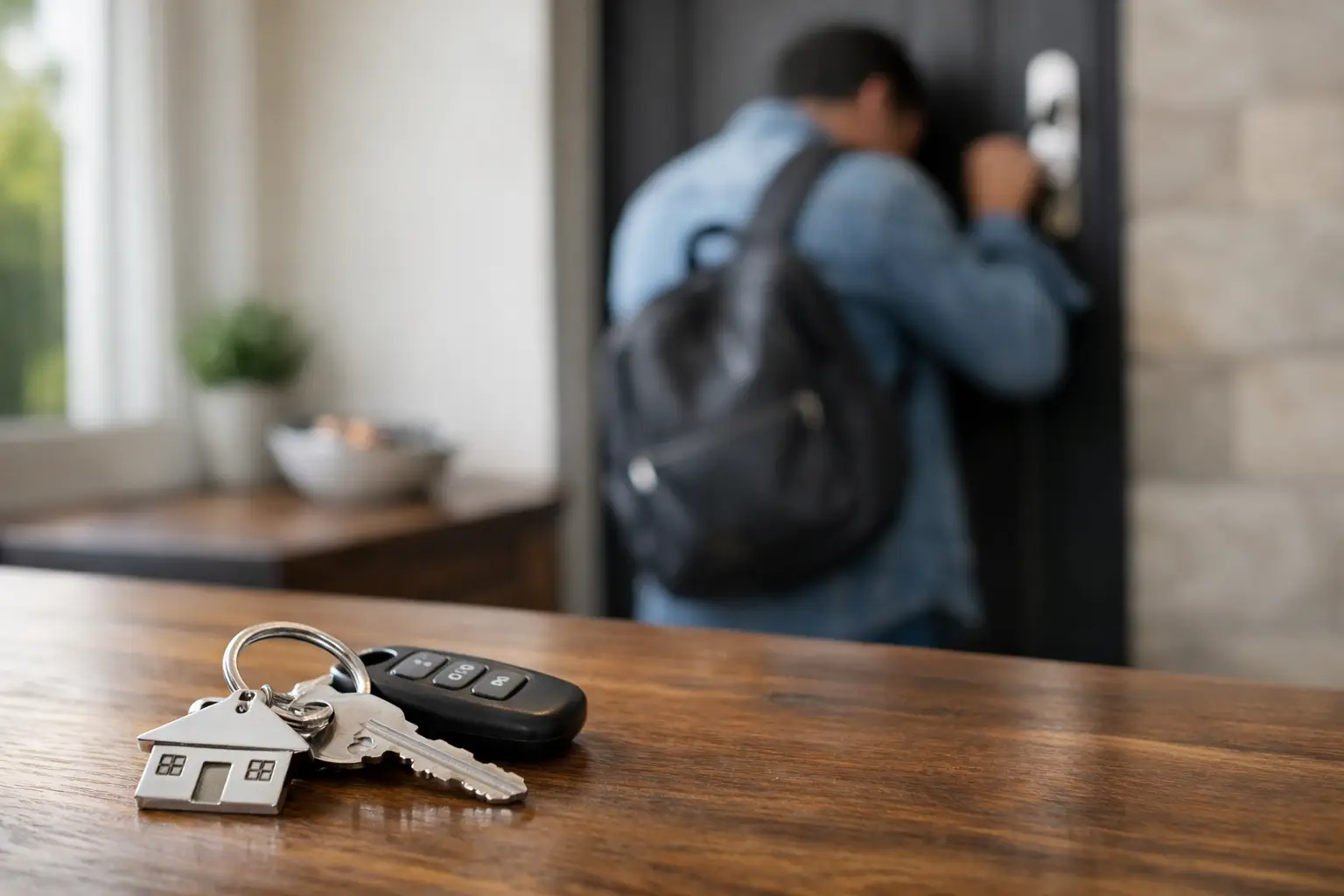
A lockout rarely starts with a dramatic mistake. More often, it happens during an ordinary moment: taking the trash out, walking the dog, checking the mail, or rushing a child into the car. The door clicks shut, the keys are inside, and the day changes immediately. This home lockout prevention guide focuses on the small routines that make that situation far less likely – without compromising your home’s security.
Home Lockout Prevention Guide: Start With Your Daily Routine
The most reliable prevention is not a gadget. It is a consistent key routine. Decide where your house keys go when you are home, where they go when you leave, and where they go during short trips outside. A dedicated hook, tray, or bowl near the entry can work well if it is not visible from a window or accessible to visitors.
Avoid carrying loose keys in a pocket, on top of mail, or in a bag that changes every day. Those habits make it easy to leave keys behind. If you use a purse, backpack, or work bag, give the keys their own zippered compartment. If you use a key ring, keep it recognizable by adding one simple tag or fob. The goal is not to make keys bulky. It is to make them hard to overlook.
Before closing a self-locking door, develop one quick check: keys, phone, wallet. It takes two seconds. Over time, it becomes automatic, especially before stepping outside for a task you expect to take only a minute.
Know Which Doors Can Lock You Out
Many homeowners assume every exterior door behaves the same way. They do not. A deadbolt usually requires a key or thumbturn to lock, while a knob lock or lever lock may lock automatically when the door closes. A storm door, garage service door, or side entrance may also have a different latch setup than the front door.
Walk through every entry door and test it from both sides while someone is home. Learn whether it can lock behind you and whether the key works smoothly. This is especially useful after moving, changing hardware, or taking over a rental property. A door that sticks, latches poorly, or needs to be lifted before the key turns is not just annoying. It can leave you outside when the lock finally fails.
Do not rely on a partially latched door as a shortcut. Wind, pressure changes, and a child or pet pushing from inside can turn a door you thought was open into a locked barrier.
Keep a Spare Key, But Do Not Hide It Outside
A spare key is useful. Hiding one under a mat, fake rock, planter, grill cover, or loose piece of siding is not. Those spots are familiar to anyone looking for easy access, and they create a security problem that is worse than an occasional lockout.
A better choice is giving a spare to a trusted nearby person who is likely to be available. That could be a relative, neighbor, or close friend. Make sure they understand that the key is for emergencies and that they should not label it with your full address.
Another option is a professionally installed lockbox in an appropriate location. This can be practical for landlords, property managers, caregivers, and households with frequent service access. The trade-off is that a low-quality lockbox or an obvious placement can attract attention. Use a durable model, set a unique code, and change that code when a tenant, contractor, or household member no longer needs access.
For many homes, a second key stored securely in a locked vehicle can be a reasonable backup. It depends on where the vehicle is parked and whether it can be accessed safely. Never leave a spare loose in the glove box or console.
Maintain the Lock Before It Becomes an Emergency
A key that catches in the cylinder, a latch that scrapes the strike plate, or a deadbolt that takes force to turn deserves attention now. Forcing a key can bend it or break it inside the lock. Slamming a sticking door can damage the latch, hardware, frame, or strike plate.
Pittsburgh-area homes deal with humidity, cold weather, settling foundations, and seasonal expansion of wood doors. These conditions can change alignment over time. Sometimes the fix is a minor door adjustment. Other times, worn hardware or a failing lock needs replacement. The key point is simple: a lock should operate smoothly without brute force.
Use a lock lubricant made for locks when appropriate, rather than heavy oil that can collect dirt inside the cylinder. If the problem continues, have a licensed locksmith inspect the door and hardware. Repairing a developing issue during normal business hours is usually calmer and less disruptive than discovering it during a late-night lockout.
Use Smart Locks With a Real Backup Plan
Smart locks can reduce lockouts because they allow keypad codes, phone access, temporary guest codes, and sometimes remote control. For busy families, rental owners, and small property managers, that convenience can be significant. But electronic access is not a substitute for planning.
Every smart lock needs a battery routine. Low batteries, a dead phone, a forgotten code, and a Wi-Fi outage can all create access problems depending on the model. Set a recurring reminder to check batteries, keep the correct replacement batteries at home, and know whether your lock has a physical key override or an emergency external power option.
Choose codes that are memorable to authorized users but not easy for others to guess. Avoid birthdays, street numbers, and simple sequences. Remove old guest or contractor codes promptly. If you are installing smart hardware on an older door, verify that the deadbolt and door alignment are in good shape first. A smart lock cannot correct a warped door or a poorly aligned strike plate.
Plan for Kids, Guests, and Pets
Household routines change when more people have access to the home. A teenager may leave without a key. A guest may lock the handle out of habit. A dog can bump a door shut while you are outside. These are normal situations, but they require clear rules.
For children old enough to come home alone, practice the entry routine with them. Make sure they know where their key belongs, what to do if it is lost, and which trusted adult to call. A keypad lock can be easier than managing a physical key for some families, but only if the child can remember and protect the code.
Guests should not need to guess whether a door locks automatically. A quick explanation at arrival can prevent an awkward call later. If a pet has a habit of pushing doors closed, use a doorstop or change the routine before stepping outside. Prevention is often a matter of noticing one repeatable behavior.
Rekey After a Move, Lost Key, or Tenant Change
Changing access is a core part of lockout prevention and home security. If you have just moved into a house, inherited keys from a prior owner, lost a key ring, or changed tenants, rekeying should be high on the list. You may have every key you were given, but you do not know how many copies were made before you arrived.
Rekeying allows the existing lock hardware to work with new keys when the lock is in good condition. It is often more practical than replacing every lock, though replacement may be the better choice when hardware is damaged, outdated, or mismatched. A locksmith can help assess the condition of the door, lock, and keyway instead of treating every situation the same.
For landlords and property managers, a documented rekeying process between occupants protects both the property and the next tenant. It also keeps key control organized when maintenance staff, cleaners, and vendors need access.
If You Are Locked Out, Protect the Door First
Even good routines do not eliminate every lockout. If you are outside, take a breath before trying a risky shortcut. Do not force a window, pry a door, drill a lock, or break glass. Those attempts can turn a straightforward service call into a repair involving the door frame, glass, weatherstripping, or lock hardware.
Check whether another authorized household member has access, whether you can safely wait in a protected area, and whether your trusted spare-key holder is available. If not, call a licensed and insured local locksmith. Ask for clear pricing before work begins and confirm that the technician will verify your right to enter the property. That verification protects homeowners, renters, and the community.
Arcane Locksmith provides professional lockout help and door security service throughout Greater Pittsburgh, with respectful on-site work when access cannot wait.
A lockout plan is most effective when it is simple enough to follow on a rushed morning. Put keys in the same place, address doors that stick, keep an authorized backup, and treat every strange lock symptom as an early warning. Those few habits can save you from spending a cold evening on the porch when you should be safely inside.