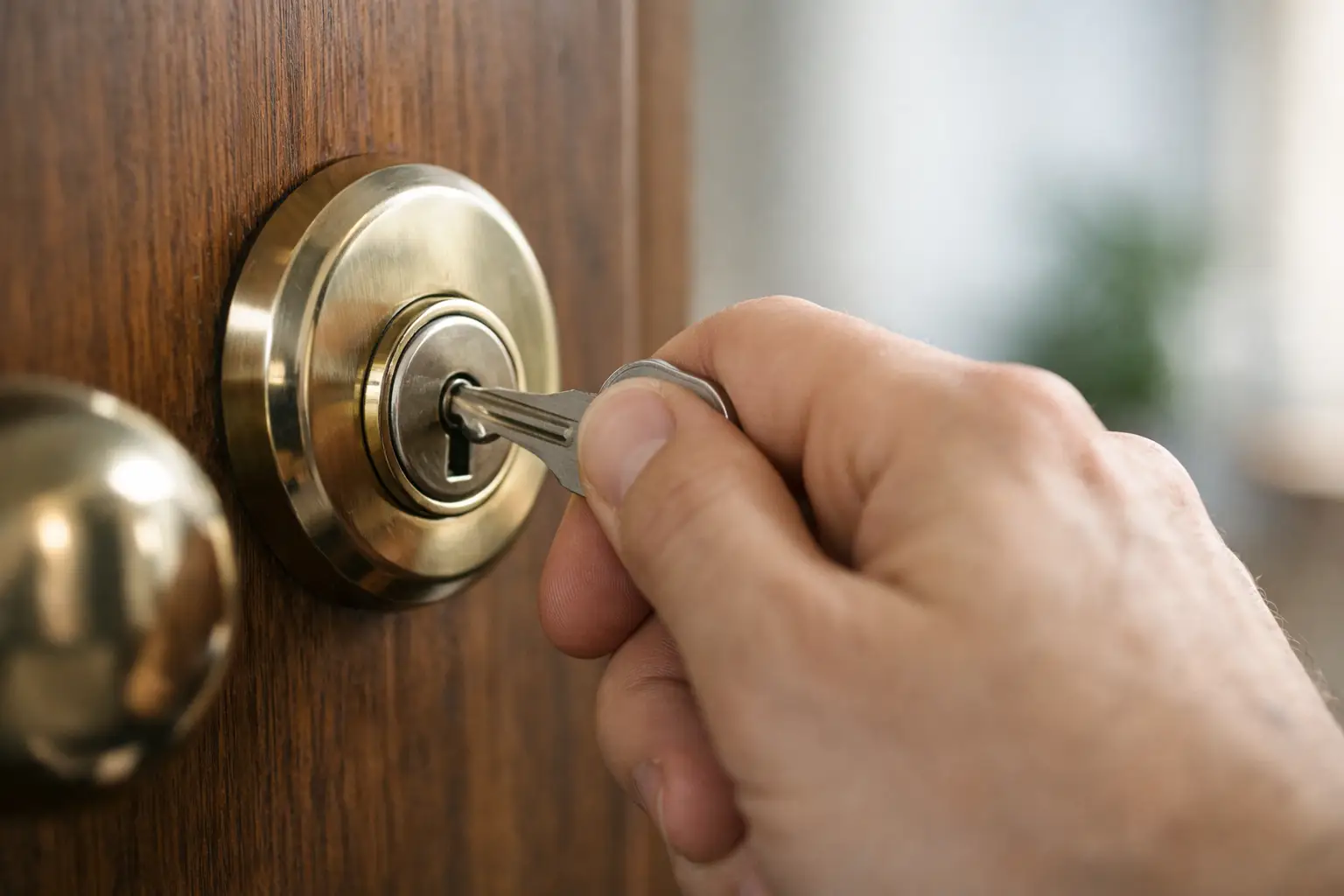
You get home, line the key up like you always do, and nothing happens. If you’re standing at your front door, office, or storefront asking, why is my key not turning, the problem is usually one of a few things: the wrong key, pressure on the lock, a worn key, a dirty cylinder, or internal lock damage. The right next step matters, because forcing it can turn a small issue into a broken key or a failed lock.
Why is my key not turning? Start with the simple causes
Most stuck-key situations are not random. A lock works through small moving pins, springs, and a cylinder that all need to line up cleanly. When one part is off, the key may slide in but refuse to turn.
The simplest possibility is that you’re using the wrong key. That sounds obvious, but similar house keys, office keys, mailbox keys, and side-door keys get mixed up all the time, especially in low light or when you’re rushed. If the key goes in only partway or feels slightly off, stop there and verify the key before doing anything else.
Another common issue is door pressure. On exterior doors, weather changes, a shifted frame, or a sagging door can put tension on the latch or deadbolt. In that case, the lock may be fine, but the bolt is binding against the strike plate. Try gently pushing or pulling the door while turning the key. Do not lean your full weight into it. A small adjustment is often enough.
Cold weather can also be part of the problem. In Pennsylvania, frozen moisture inside a lock can keep internal parts from moving freely. That is different from a lock being mechanically broken, and the fix is different too.
The key may be worn down
Keys wear out gradually, which is why many people do not notice the problem until one day the lock stops responding. Over time, the cuts on the key smooth out. If the key has rounded edges, visible wear, small bends, or hairline cracks, it may no longer lift the pins to the correct height.
This often shows up in older home locks, rental properties, and commercial doors that get heavy daily use. One duplicate made from another duplicate can make things worse. Every generation of copied key tends to lose a little accuracy.
If you have a newer spare key that was cut from the original, try that instead. If the spare turns cleanly, the issue is likely the worn key, not the lock. If every key struggles, the lock itself deserves a closer look.
Dirt, debris, and lack of lubrication can block the cylinder
Locks live hard lives. Dust, pocket lint, metal shavings, old lubricant, and grime can build up inside the keyway. On exterior doors, rain, temperature swings, and debris make the problem more common.
A dirty lock often feels stiff before it stops turning completely. You might notice resistance when inserting the key, a gritty feel, or the need to jiggle the key more than usual. That is your warning sign.
If you suspect buildup, use a lock-safe dry lubricant. Avoid soaking the lock with oil-based products. Thick oils can attract more dirt and create a sticky mess inside the cylinder over time. If the lock improves briefly and then starts sticking again, that usually points to internal wear rather than simple dryness.
The lock itself may be failing
When people ask why is my key not turning in the lock, a worn or damaged lock cylinder is high on the list. Pins can stick, springs can weaken, and internal parts can shift out of alignment. In some cases, the plug begins to fail and no longer rotates correctly even with the right key.
This is especially common on locks that have seen years of daily use without maintenance, on cheaper hardware, or after an attempted break-in. You may also have a partially broken component if the key turns a little but stops midway, or if it only works with a specific amount of pressure.
At that point, forcing the key is a bad gamble. A broken key stuck in a failing lock can turn a quick repair into a more involved service call. For homeowners, landlords, and small business owners, that also means a security issue until the door is properly secured again.
What to do when your key won’t turn
Start with a calm, light-touch approach. Make sure the key is fully inserted and verify it is the correct one. Then try easing pressure off the door by gently pushing or pulling while turning the key. If the lock is on a deadbolt, make sure the door is fully closed and aligned.
If the key looks bent, cracked, or badly worn, stop using it. Try a better spare if you have one. If the key and lock both seem intact but movement feels gritty or stiff, a dry lock lubricant may help.
What you should not do matters just as much. Do not twist harder. Do not hammer the key. Do not use excessive force with pliers. And do not keep jiggling aggressively if the key feels fragile. That is how keys snap off inside cylinders.
If you’re dealing with a commercial door, glass storefront, panic hardware, or a multi-point residential lock, it makes even more sense to stop early. Those systems can be more sensitive to alignment problems and more expensive to repair if forced.
When the problem is the door, not the key
A lot of people assume the lock is bad when the real issue is door alignment. Houses settle. Hinges loosen. Frames shift. Weather stripping compresses unevenly. On business entries, constant use can pull a door slightly out of position.
When that happens, the bolt does not line up cleanly with the strike. The key may insert normally but refuse to turn because the lock is under side pressure. You may also notice the door rubbing, sticking, or needing a harder push to close.
This is one of those situations where the fix depends on the cause. Minor seasonal swelling may come and go. A sagging hinge or shifted strike plate will usually keep getting worse. A locksmith can often spot the difference quickly and tell you whether you need lock service, door adjustment, or both.
Car keys that won’t turn are a different problem
If your car key is not turning in the ignition, the cause may have nothing to do with a door lock cylinder. Steering wheel tension is a common reason. If the wheel is locked hard to one side, the ignition key may not rotate until you gently move the wheel while turning the key.
Worn car keys are also common, especially on older vehicles with traditional metal keys. In some cases, the ignition cylinder itself is worn. For newer vehicles, transponder and electronic issues can add another layer.
That is why context matters. A front door lock, a storefront deadbolt, and a vehicle ignition may all show the same symptom, but the repair path is different.
When to call a locksmith
If you’ve confirmed the key is correct, relieved door pressure, tried a good spare, and the lock still will not turn, it is time to call a professional. The same goes for a key that feels like it might snap, a lock that only works intermittently, signs of tampering, or a commercial entry that needs to stay secure.
A licensed, insured locksmith can determine whether the issue is the key, cylinder, hardware, or alignment, and fix it without unnecessary damage to the door. In urgent situations, that matters. Fast service is not just about getting the door open. It is about preserving the lock when possible, restoring security, and avoiding a more expensive repair caused by force.
For property managers and landlords, a stuck lock can also affect tenant access, turnover schedules, and liability. For homeowners, it can leave a house unsecured. For small businesses, it can delay opening, disrupt staff access, and affect customer safety.
In the Pittsburgh area, especially during winter or after heavy rain, lock trouble often starts with weather and ends with hardware wear. The sooner it is checked, the better the odds of a straightforward fix.
How to prevent the next stuck key problem
Good lock habits help more than people think. Replace worn keys before they fail. Do not keep using a bent copy just because it still works sometimes. Pay attention to doors that need an extra shove to latch. That is often an early sign of alignment trouble.
It also helps to service problem locks before they become emergencies. If a key has started sticking, if the cylinder feels rough, or if one door works differently from the rest, have it checked. A simple rekey, cylinder replacement, adjustment, or hardware upgrade is usually easier and cheaper than an after-hours lockout with a broken key involved.
If your first thought was why is my key not turning, the bigger question is whether the problem is safe to troubleshoot yourself. Sometimes it is. Sometimes the smartest move is to stop before the key breaks and get a licensed locksmith on site. A stubborn lock rarely fixes itself, but it often gives you a warning before it fails completely.
6 responses to “Why Is My Key Not Turning in the Lock?”
[…] key that catches in the cylinder, a latch that scrapes the strike plate, or a deadbolt that takes force to turn deserves attention […]
[…] usually break for no reason. Many failures happen after weeks or months of small warning signs: the key starts catching, the deadbolt needs a hard turn, or the door must be pulled or pushed before it locks. Cold […]
[…] you need entry quickly, management is unavailable, or the lock itself has failed. This includes a key that turns but will not open the door, a jammed deadbolt, a broken key, or an electronic lock that is not […]
[…] may also have a concealed key cylinder behind a trim cap. Use the emergency key gently. If it will not turn, do not force it. A stuck cylinder can break the key or damage the […]
[…] healthy key should enter, turn, and come out without a fight. If the key sticks halfway in, needs repeated wiggling, or only turns when held at a certain angle, the keyway or cylinder may […]
[…] dog walkers, or a former roommate. During the final walkthrough, the deadbolt works, but the key turns roughly in the cylinder and the latch on the entry knob does not retract […]