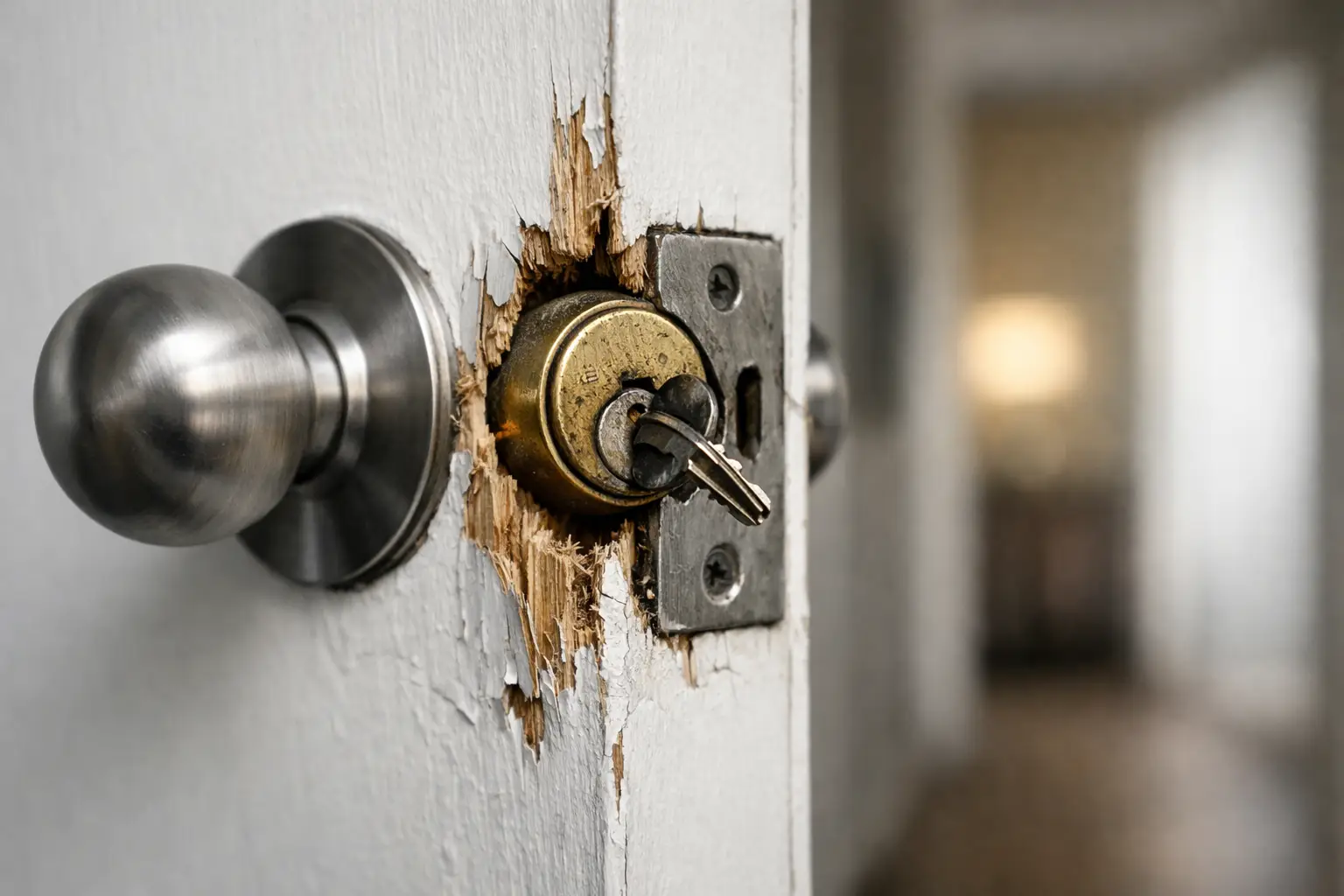
A lock rarely fails without warning. The top signs of lock damage often start small: a key that needs an extra jiggle, a deadbolt that catches, or a door that suddenly takes a hard push to close. Ignoring those changes can turn a routine errand into a lockout, leave a home or business less secure, or cause a more expensive door repair.
For Pittsburgh-area property owners, weather, daily use, settling foundations, and attempted break-ins can all affect how a lock performs. The right response depends on the cause. Sometimes a lock needs lubrication or adjustment. Other times, continuing to use it can break a key, damage the cylinder, or compromise the door’s security.
Lock damage is not always the lock itself
A key may feel difficult to turn because the lock is worn, but the door and frame can be the real problem. Wood doors expand with moisture, frames shift over time, and a sagging hinge can pull a deadbolt out of alignment with its strike plate. When that happens, the bolt meets resistance even though the cylinder still works properly.
That distinction matters. Spraying lubricant into a lock will not fix a misaligned door, and forcing a deadbolt into a poorly aligned strike can eventually damage a perfectly serviceable lock. A professional inspection should look at the key, cylinder, bolt, latch, hinges, door frame, and strike plate before recommending a repair or replacement.
Top signs of lock damage that need attention
Your key sticks, catches, or requires force
A healthy key should enter, turn, and come out without a fight. If the key sticks halfway in, needs repeated wiggling, or only turns when held at a certain angle, the keyway or cylinder may be dirty, worn, corroded, or internally damaged.
Do not force the key. Excess pressure can snap it inside the lock, especially if the key is already bent or worn down. A broken key is often removable, but it adds time and can conceal a larger issue with the cylinder. Use a spare key only if it is in good condition. If both keys behave the same way, stop using the lock until it can be checked.
The deadbolt will not extend or retract smoothly
A deadbolt should move fully into and out of the door edge with one controlled turn. Grinding, scraping, a partial throw, or a bolt that gets stuck are clear warning signs. You may notice the interior thumbturn is difficult to operate, the exterior key turns without moving the bolt, or the bolt only works while the door is open.
When the lock works with the door open but binds once closed, alignment is likely part of the problem. If it binds in both positions, internal wear or a damaged bolt mechanism may be to blame. Either way, do not keep slamming the door or leaning your shoulder into it to make the lock catch. That can bend hardware, loosen the strike plate, or split the frame.
The lock feels loose, crooked, or moves in the door
A loose doorknob, lever, deadbolt, or lock cylinder is more than an annoyance. Hardware that shifts when you turn the key may have loose mounting screws, stripped screw holes, damaged internal parts, or a compromised door surface. On a commercial door, a loose lever or panic hardware can also create an access and safety concern.
Tightening visible screws may help if they simply worked loose over time. But avoid overtightening or disassembling a lock when you are unsure of the problem. Incorrect installation can cause a latch or deadbolt to bind, and a loose cylinder can make the lock easier to manipulate or damage. A qualified locksmith can secure the hardware while checking whether the door itself needs reinforcement.
You see rust, cracks, dents, or obvious wear
Exterior locks are exposed to rain, road salt, temperature swings, and moisture. Surface discoloration may be cosmetic, but rust around the keyway, bolt, latch, or mounting screws can signal corrosion inside the mechanism. Cracks in the lock body, a bent deadbolt, chipped trim, or dents around the cylinder deserve faster attention.
Visible damage is especially concerning after a break-in attempt, lost-key incident, tenant turnover, or vandalism. Even if the key still turns, a lock that has been pried, drilled, struck, or twisted may no longer provide dependable protection. In those situations, replacement and re-securing the opening are usually safer than trying to preserve damaged hardware.
The latch does not catch or the door opens too easily
If a closed door can be pushed open without turning the handle, the latch may not be reaching the strike plate. You may also find that the door rattles in the frame, has a noticeable gap, or needs to be lifted before it will latch. This is a common problem on doors that have settled, swollen, or received a new weatherstrip.
Do not treat it as a minor inconvenience. A latch that does not engage can leave a residence, office, storage room, or rental unit unsecured. The repair might be as simple as realigning the strike plate, but the latch, door edge, hinges, or frame may need work. The same principle applies to deadbolts: a bolt that does not reach fully into the frame does not offer the protection it should.
The key turns, but nothing happens
A key that spins freely or turns farther than usual without operating the latch or deadbolt can indicate a failed tailpiece, worn cylinder, broken actuator, or disconnected internal component. This problem can arrive suddenly, often at the least convenient time.
Avoid repeated attempts. Spinning the key back and forth may worsen loose internal parts or leave the door locked in a position that is harder to service. If you are outside, inside a secured building, or responsible for a business entry, call for professional help before the situation becomes a full lockout.
What not to do when a lock starts failing
The fastest way to turn a repairable lock into a replacement is to force it. Avoid using pliers on a key, heavy oil in the cylinder, a screwdriver in place of a key, or repeated hard impacts on the door. Household oils can collect dirt inside the keyway, while force can break the key or damage the pins and springs.
If the door is sticking, check whether gentle pressure toward or away from the frame lets the key turn. That can help identify an alignment problem without abusing the hardware. If it still resists, stop. A locked door is frustrating, but a broken key or damaged frame creates a more involved service call.
Repair, rekey, or replacement: what makes sense?
The best option depends on the lock’s condition and the reason for service. A door alignment issue may only require an adjustment. A quality lock with a dirty or worn cylinder may be repaired. Rekeying is often appropriate after a move, employee departure, lost keys, or a change in occupancy when the lock hardware remains sound.
Replacement is usually the better choice when a lock has severe internal wear, visible break-in damage, corrosion, a failed electronic component, or outdated hardware that no longer fits the property’s security needs. For landlords and small business owners, replacement can also be an opportunity to standardize keys, improve access control, or install code-compliant commercial hardware such as panic bars.
Smart locks and electronic locks add another consideration. A failing battery, loose keypad, unresponsive motor, or damaged cable may look like a mechanical lock problem but requires a different diagnosis. Before replacing electronic hardware, confirm that the door alignment, power source, programming, and mechanical override are all functioning correctly.
When the problem needs urgent locksmith service
Treat the issue as urgent when you cannot secure the door, a key has broken inside the lock, there are signs of forced entry, or the lock protects a business, rental property, medicine cabinet, safe, or restricted area. A damaged exterior lock after a break-in attempt should be addressed promptly, even if it appears to work.
Arcane Locksmith provides licensed, insured mobile service for lock damage, door issues, rekeying, emergency lockouts, and property re-securing throughout Greater Pittsburgh. Clear diagnosis and honest pricing matter when a lock problem cannot wait.
A lock should give you a clear, reliable response every time you use it. If yours is sticking, spinning, loosening, or failing to latch, act while the door can still be opened and secured safely. Early service protects your property, avoids unnecessary damage, and gives you one less urgent problem to face at the end of the day.