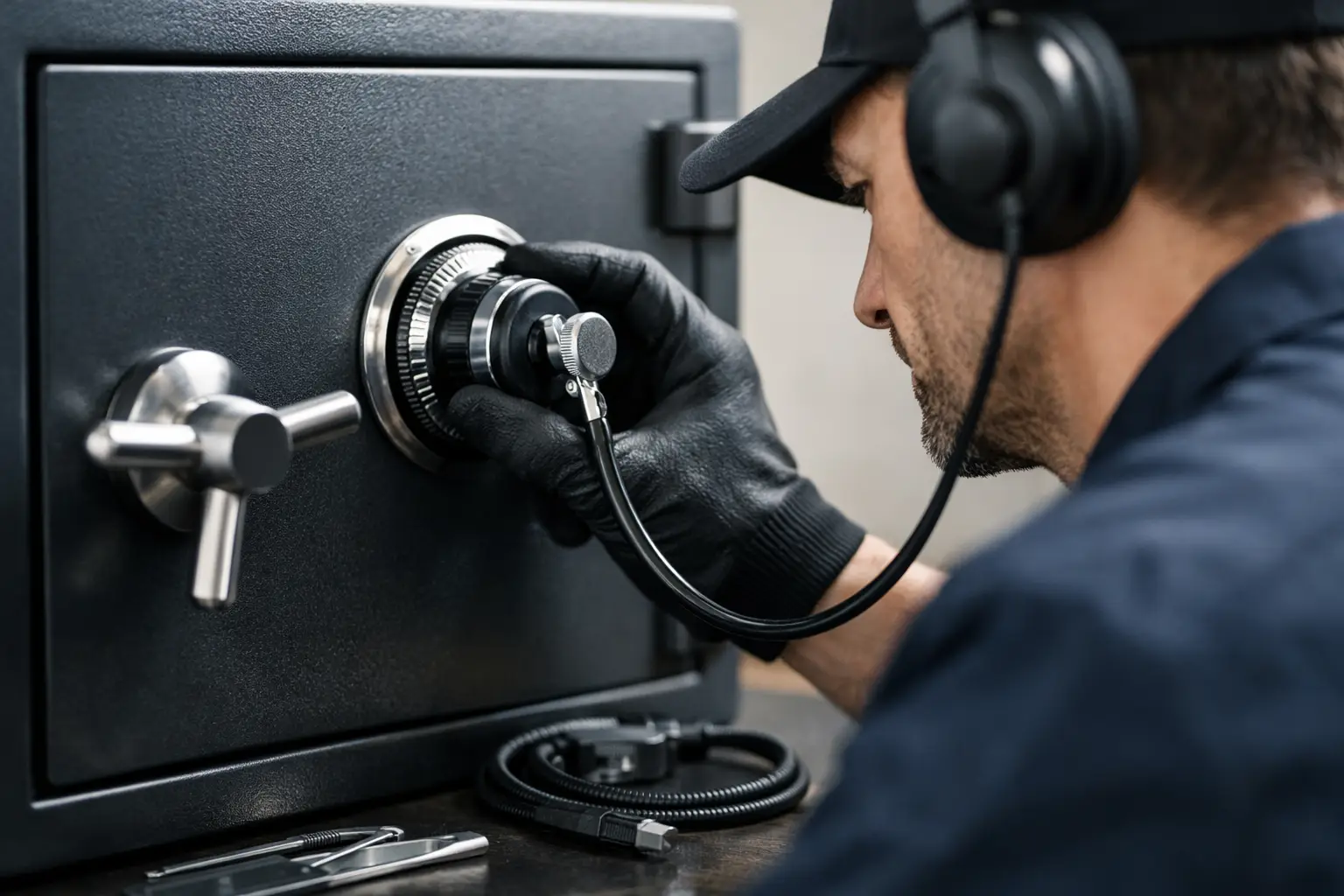
A forgotten safe combination can turn a normal workday or a stressful home situation into an immediate access problem. If you need a safe locksmith for forgotten combination access, the goal is not simply to get the door open. The right service protects the safe, verifies rightful ownership, and gives you a reliable way to secure it again once access is restored.
Safes are built to resist forced entry. That is why guessing repeatedly, striking the door, or trying internet “tricks” can create a bigger and more expensive problem. A licensed locksmith can assess the type of safe, the lock installed, and the condition of the door before recommending the safest practical method of entry.
When a forgotten combination needs professional help
It is common to remember part of a combination but not the exact sequence, direction changes, or final stopping point. Mechanical dial locks require precision. Being one number off, turning the dial in the wrong direction, or starting from the wrong position can prevent a correct combination from working.
Electronic safes create a different set of issues. A low battery, failed keypad, damaged wiring, lockout delay, or incorrect override key can look like a forgotten code problem. Before assuming the safe has failed, check the manufacturer instructions for battery replacement procedures and any documented override option that came with the safe. Do not force the keypad or battery compartment open.
Professional safe service is especially appropriate when the safe contains legal documents, business cash, medications, firearms, valuables, tenant records, or items needed for an estate or property transfer. Time matters in those situations, but so does discretion. A reputable locksmith will not treat a safe as an ordinary lockout.
What a safe locksmith for a forgotten combination will do
A qualified technician starts by identifying the safe. The brand, model, approximate age, lock type, and location of the safe all influence the service approach. A compact residential fire safe may have a very different construction from a commercial burglary-rated safe, gun safe, floor safe, or depository safe.
The locksmith should also verify that you have authority to access the safe. Depending on the situation, that may include photo identification, proof of address, business authorization, purchase records, estate paperwork, or a lease and property management documentation. This step protects you, your property, and everyone who relies on the safe’s security.
After inspection, the technician can explain the available options. In some cases, the issue can be resolved by properly operating the existing lock, replacing a battery, servicing a worn component, or using an authorized recovery process. Other situations may require specialized safe opening work. The least destructive method is generally preferred, but the right choice depends on the safe’s design, security rating, lock condition, and prior damage.
A professional should be clear about the trade-off before work begins. Entry without damage is not guaranteed, particularly on older safes, failed electronic locks, or high-security units. If drilling or lock replacement is necessary, the technician should explain why, discuss how the safe will be secured afterward, and provide straightforward pricing rather than vague promises.
Do not make the problem worse while waiting
A safe door can be damaged by more than obvious force. Repeatedly spinning a mechanical dial at random can make it harder to determine whether there is a user error or a mechanical fault. Using a pry bar, hammer, drill, or improvised tool can damage the door, bolt work, relocker system, or frame. It may also turn a serviceable safe into one that needs extensive repair.
Avoid relying on online videos that claim every safe has a quick bypass. Many videos are outdated, apply only to a specific low-security model, or leave out the risk of permanently damaging the lock. A safe that is easy to defeat using a universal trick would not provide much protection in the first place.
If the safe is electronic, do not keep entering codes after a lockout warning appears. Many models impose timed penalties after too many incorrect attempts. Write down any code combinations you have already tried, along with the safe brand and model information. That can save time when the locksmith arrives.
The safe type changes the service plan
Mechanical combination safes
Traditional mechanical dial locks are durable, but they depend on exact dialing. The original combination may be recoverable only through authorized manufacturer procedures, and not every older safe has records available. A locksmith may be able to diagnose a dialing issue, service the lock, or open the safe using techniques appropriate to the lock and container.
Electronic keypad safes
Electronic locks may fail because of batteries, keypad wear, power loss, internal corrosion, or lock failure. Replacing the battery can help on some models, but only when the battery compartment is designed for external access. If the battery is inside the locked safe, do not damage the keypad trying to reach it. The safe may need professional entry and a replacement lock.
Gun safes and high-security safes
Gun safes and burglary-rated safes often include thicker steel, multiple locking bolts, hardened drill-resistant plates, and relockers that activate after an attack. These features are valuable for security, but they make careless DIY attempts particularly costly. Opening and restoring these safes requires specialized tools, experience, and a plan for proper re-securing.
Business and depository safes
For small businesses, a locked safe can interrupt payroll, deposits, daily cash handling, and access to vital records. Business owners should authorize access through the appropriate manager or owner and ask about restoring the safe after entry. If an employee knows a former combination, or a code may have been shared too widely, changing the combination or replacing the lock is the better security decision.
Questions to ask before scheduling safe service
Price matters, especially when access is urgent. It should not come at the expense of proper safe work. Before approving service, ask whether the company is licensed and insured, whether it regularly handles safes, how ownership will be verified, and whether the quoted price includes the expected opening method.
Also ask what happens after the safe is opened. A safe that opens but cannot be locked afterward is not a finished job. You may need a new mechanical lock, electronic keypad, override key procedure, dial combination change, bolt work repair, or basic maintenance. The best answer depends on the safe and what caused the access failure.
For Pittsburgh-area homes and businesses, Arcane Locksmith provides mobile safe access service with a focus on honest pricing, careful workmanship, and respectful handling of the property. If the safe contains sensitive business records, family valuables, or firearms, tell the dispatcher that when you call so the service need is understood from the start.
After access is restored, secure the safe again
Once the door is open, resist the urge to close it immediately. Confirm that the lock operates correctly while the safe is still open, then update the combination or code as needed. Store the new information in a secure location that is separate from the safe. For a business, limit code access to the people who genuinely need it and document who is authorized.
If the safe has been moved, check its mounting and placement. A small safe that is not secured can be carried away, while a poorly installed floor or wall safe may develop door alignment issues over time. A locksmith can advise whether the existing lock still fits your needs or whether a modern electronic or high-security option makes more sense.
A forgotten combination is frustrating, but it does not have to become a damaged-safe emergency. Get help from a licensed professional, have proof of authorization ready, and choose a service that treats both access and future security as part of the same job.