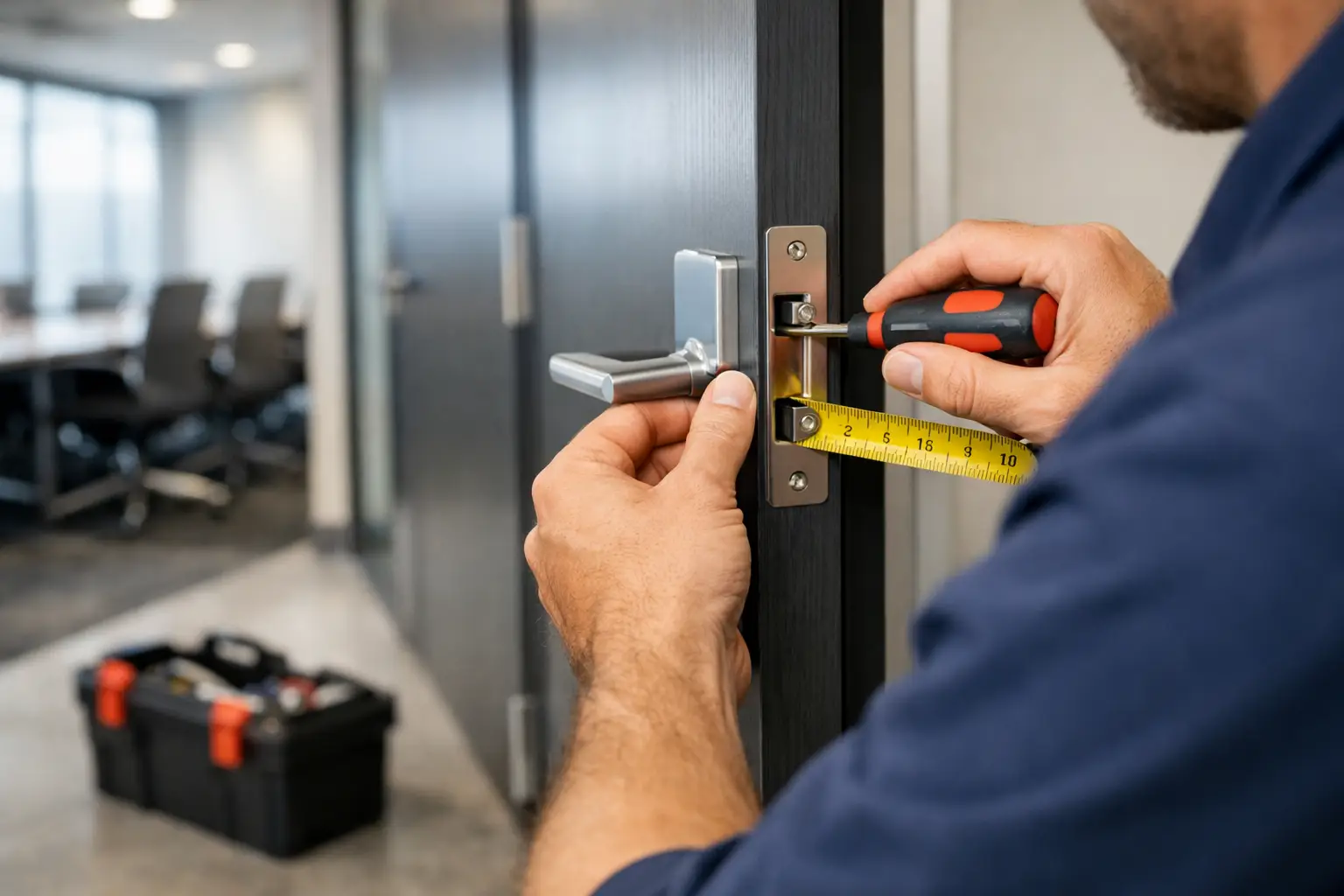
The last employee leaves, the alarm is set, and the office door will not stay shut. An office door not latching properly is more than an everyday annoyance. It can leave files, equipment, inventory, and staff access points exposed. It can also create a serious problem if the door is part of a required fire or emergency exit route.
Before forcing the door, identify what is happening. A latch that barely catches needs a different repair than a door that will not close, a handle that does nothing, or a deadbolt that no longer lines up. The right fix protects the door, the lock, and your business from a more expensive failure.
Why an Office Door Will Not Latch
A door latches when the spring-loaded latch bolt enters the strike plate opening in the frame. If those two pieces no longer meet correctly, the door may bounce open, need to be lifted or pushed hard, or appear closed without actually securing.
The most common cause is alignment. Office doors are used constantly, and normal wear can loosen hinges, shift a strike plate, or allow a heavy door to sag slightly. Seasonal temperature and humidity changes can also affect wood doors and frames. In the Pittsburgh area, that movement is especially noticeable when weather shifts quickly between cold, damp, and warm conditions.
A worn latch assembly is another frequent issue. The latch bolt may not extend fully, may stick inside the lock body, or may have a rounded, damaged edge that no longer grabs the strike plate. If the lever feels loose, droops, spins, or needs repeated movement before the latch releases, the hardware itself may be failing.
The problem may also be in the door closer. A closer that shuts the door too slowly may leave it short of the frame. One that closes too forcefully can cause the door to rebound before the latch catches. On commercial doors, closer adjustment needs care. An improperly adjusted closer can make access difficult, damage hardware, or affect safe operation.
Quick Checks Before You Force the Door
Start with a simple test: close the door slowly while watching where the latch meets the strike plate. If the latch hits above, below, or beside the opening, the door and frame are out of alignment. If it lines up but will not enter or stay engaged, debris, a damaged strike, or a failing latch may be the cause.
Look for loose hinge screws, especially at the top hinge. A sagging door often leaves uneven gaps around the frame, with a larger gap at the top on the latch side or rubbing near the threshold. Tightening visibly loose screws can sometimes improve a minor issue, but do not over-tighten stripped screws or use oversized hardware without knowing what is behind the frame.
Check the strike plate for loose screws, bent metal, chipped paint buildup, or a blocked opening. Paint, dust, and small debris can prevent the latch from seating fully. Clean the opening carefully and test the door again. Do not file the strike opening aggressively as a first response. Removing too much metal can weaken the latch engagement and create a security concern.
If the handle will not retract the latch, avoid spraying heavy oil or forcing the lever. The lock may have an internal break, and forcing it can turn a repairable issue into a lockout or a door that cannot be secured at all.
When the Problem Is the Lock, Not the Door
A misaligned door usually gives you clues. The latch may work normally when the door is open but fail only when you close it. A lock problem behaves differently: the latch may stick, remain partially retracted, or fail to move even with the door open.
Electronic access hardware can add another layer. A keypad, card reader, electric strike, magnetic lock, or smart lock may be preventing normal operation because of a power issue, wiring fault, programming error, or damaged mechanical component. Do not assume an electronic lock is the sole problem. A misaligned door can put pressure on the latch and cause access-control hardware to fail prematurely.
For offices with restricted areas, avoid disabling access hardware just to get through the day. Propping a door open or bypassing a latch may violate company policy, compromise records or inventory, and make it impossible to track entry. A licensed commercial locksmith can diagnose the mechanical and access-control sides of the problem without unnecessarily replacing working equipment.
Do Not Ignore Fire Doors and Exit Doors
A door labeled as a fire door, a stairwell door, or an emergency exit should never be treated as a casual DIY project. These doors are designed to close and latch under specific conditions. Their hinges, closer, latch, strike, frame, and panic hardware work together to support life safety.
Do not wedge a fire door open, remove its closer, tape down a latch, or alter the frame to make the door easier to shut. If a panic bar will not latch or an exit door is difficult to open from the inside, treat it as an urgent service issue. Staff and visitors must be able to leave safely, while the door must still secure correctly when closed.
A commercial locksmith can inspect the hardware, correct alignment, and determine whether the issue involves the door closer, panic device, strike, latch, or frame. For a building with multiple tenants or employees, prompt repair is the responsible choice.
Repairs That Usually Solve the Problem
The proper repair depends on the cause. For a lightly sagging door, hinge adjustment or replacement screws may restore alignment. A shifted strike plate may need repositioning so the latch enters fully. If the latch is damaged or worn, replacing the lever set, mortise lock, cylindrical lock, or latch component may be the dependable option.
Door closer adjustments can help when the door does not close with enough force or slams and rebounds. However, closer settings should be balanced carefully. The goal is not simply to make the door shut harder. It must close reliably, latch securely, remain accessible for authorized users, and operate safely.
Sometimes the door or frame has been damaged by impact, moisture, or years of use. In those cases, changing lock hardware alone will not solve the underlying problem. A locksmith can identify whether the repair requires hardware service, frame work, a door contractor, or coordination between trades. Honest diagnosis prevents you from paying for a new lock when the frame is the real issue.
Protect Your Office Until Help Arrives
If the office door cannot be secured, move sensitive files, keys, laptops, cash drawers, medications, or high-value equipment away from the affected area. Confirm that exterior doors are not left accessible after business hours. If the door separates a public area from a restricted workspace, consider assigning staff to monitor access until the repair is complete.
Do not rely on a chair, tape, a temporary wedge, or an improvised padlock setup to secure a commercial door. Those workarounds can damage the door, interfere with emergency egress, and create liability if someone is injured. If the issue occurs after hours, a 24/7 mobile locksmith can restore secure operation without waiting for the next business day.
Arcane Locksmith provides licensed, insured commercial door and lock service for businesses throughout Greater Pittsburgh, including urgent latch failures, damaged lock hardware, door alignment concerns, panic-bar issues, and re-securing after a break-in. A professional assessment should include the latch, strike plate, hinges, closer, lock cylinder, and the way the door fits the frame, not just the most obvious broken part.
Prevent the Next Latch Failure
Office door hardware lasts longer when it is checked before it becomes an emergency. Ask staff to report doors that need a hard push, stick at the frame, slam, bounce open, or require lifting to lock. Those are early warnings that alignment or hardware is changing.
For busy offices, retail spaces, clinics, rental properties, and managed buildings, periodic hardware checks are a practical security measure. Pay special attention to exterior doors, employee-only doors, utility rooms, records storage, and any opening with panic hardware or electronic access control. Small adjustments made early can prevent a late-night lockout, an unsecured office, or a door that fails when someone needs it most.
A door should close, latch, and secure without force. If yours does not, treat the issue as a security repair, not a nuisance to work around.