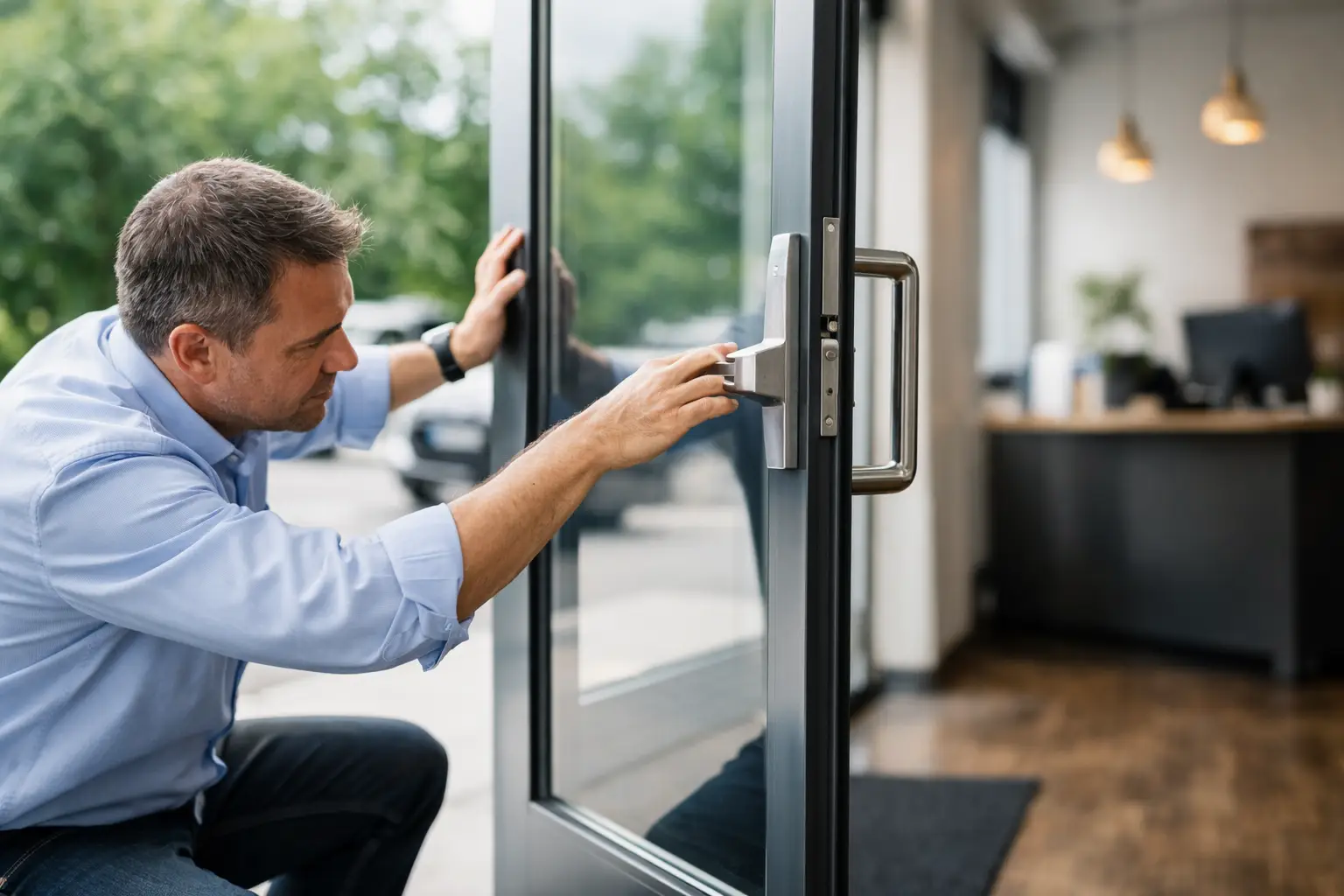
A business door won’t close at the end of the day, during a delivery, or while customers are coming through the entrance. That is more than an inconvenience. It can leave your property unsecured, interrupt operations, create a safety concern, and expose hardware to further damage if someone forces it shut.
The right response depends on what the door is doing. A door that rubs the frame needs a different repair than one with a latch that will not catch, a failing panic bar, or an access-control lock that will not release. Start with a few safe checks, then bring in a licensed commercial locksmith when the issue affects security, fire safety, or your ability to lock up.
Why a business door won’t close
Commercial doors are heavy, frequently used, and built from several components that must stay aligned. A small shift in one area can stop the entire door from closing properly. In many cases, the problem develops gradually before it becomes urgent.
The door or hinges have shifted
If the top or bottom edge of the door scrapes the frame, drags on the threshold, or has an uneven gap around it, the hinges may be loose, worn, bent, or pulling away from the frame. Constant traffic, a hard impact, building movement, and the weight of a metal or glass storefront door can all affect alignment.
Do not assume tightening one loose screw will solve a commercial hinge problem. Stripped mounting points, damaged hinge pivots, and a sagging door can require proper adjustment or replacement. Continuing to push or slam the door can damage the frame, closer, lock, and latch.
The latch is not lining up with the strike plate
A door can look closed but still refuse to latch. You may need to lift the handle, pull hard, or push the door inward before the bolt catches. This usually points to a misaligned strike plate, a shifted door, a worn latch, or an incorrect door closer adjustment.
Look for fresh scrape marks on the latch bolt or strike plate. They can show where the hardware is colliding. Avoid filing down the strike or forcing the latch into place as a quick fix. Removing too much material can weaken the lockup and create a larger repair later.
The door closer is working against the door
A commercial door closer controls the speed and force of the door as it returns to the frame. When it leaks, is damaged, has loose arms, or is adjusted incorrectly, the door may stop short, slam, drift open, or fail to overcome weatherstripping and latch resistance.
Closer adjustments are precise. Turning the wrong valve too far can cause the door to close dangerously fast or prevent it from closing at all. This is especially important on customer entrances, office exits, and fire-rated doors where reliable closing is part of the door’s safety function.
Panic hardware or the lock is binding
Panic bars, exit devices, mortise locks, cylindrical levers, and electric strikes can all fail in ways that prevent normal closing. A latch may stay retracted. The panic bar may not reset. A bolt may hit the frame. On an electronic door, a wiring or power issue can affect the electric strike or magnetic lock.
If the door is an emergency exit, never disable, tape down, or alter panic hardware to keep the door operating. Exit doors must allow people to leave safely, and improvised repairs can create a serious liability issue for a business owner or property manager.
Weather, debris, or a damaged threshold is in the way
Pittsburgh-area weather can expose small door issues quickly. Ice, packed snow, swollen weatherstripping, wind pressure, and debris around the threshold can keep a door from seating correctly. A bent sweep, loose threshold, or damaged bottom gasket can also create enough resistance to stop the latch from reaching the strike.
Check the threshold and frame for obvious obstructions. Clear loose debris carefully and remove ice around the exterior when it is safe to do so. If the door still binds after the opening is clear, the underlying issue is likely alignment or hardware related.
What to do before forcing the door
First, protect people and the property. Keep customers and staff from repeatedly using a door that is dragging, slamming, or failing to latch. If it is an exterior entrance, use another safe entrance while you assess the problem.
Try closing the door slowly while watching where it catches. Notice whether the issue occurs at the top, bottom, latch side, or threshold. Then test the handle or panic bar gently. If the latch works when the door is held in a certain position, that is useful information for the technician and strongly suggests alignment trouble.
You can also inspect for loose visible screws, damaged weatherstripping, broken glass, signs of impact, and closer oil leaking onto the door or floor. Do not remove lock cylinders, dismantle panic hardware, drill the frame, or make major closer adjustments. Those steps can compromise the door’s security and may turn a repairable problem into a replacement job.
If the door is stuck open and the building cannot be secured, move quickly. Keep the area monitored, secure valuables and sensitive records, and contact a commercial locksmith for emergency service. If there has been a break-in attempt, preserve the scene as much as possible before repairs are made.
When the issue needs a commercial locksmith
Call for professional help right away when the door will not lock, an exterior opening is unsecured, a fire or exit door does not close and latch, the panic bar is malfunctioning, or the door has been damaged by impact or attempted forced entry. These are not wait-and-see issues.
A qualified locksmith can diagnose how the door, hinges, frame, closer, strike, lock, and access hardware interact. The repair may involve realigning the door, adjusting or replacing hinges, repairing the strike, servicing the closer, replacing a damaged latch, or correcting panic hardware. The correct fix is the one that restores both everyday use and secure lockup.
For businesses with electronic access systems, the locksmith should also verify that the door still operates safely during normal use and that the mechanical hardware is not being masked by an electrical issue. A card reader or keypad may appear to be the problem when the actual cause is a door that is no longer aligned.
Arcane Locksmith provides licensed, insured commercial door and lock service for businesses throughout the Greater Pittsburgh region, including urgent help when a door will not close or secure properly. Honest pricing and a clear explanation of the repair matter when a business decision needs to be made quickly.
Prevent a repeat problem
A door that gets used dozens or hundreds of times a day needs periodic attention before it fails. Have staff report doors that scrape, require extra force, fail to latch on the first try, or close too quickly. Early service is usually less disruptive than an emergency call after hours.
Property managers and business owners should also inspect high-use exterior doors after severe weather, moving deliveries, or any impact from carts and equipment. Check that the closer arm is secure, the door closes and latches without being pulled, the strike area is intact, and panic hardware resets properly.
For multi-tenant properties, restaurants, retail spaces, and offices with frequent employee turnover, door service is also a good time to review key control, rekeying needs, and the condition of electronic access hardware. A properly operating door only helps if the locking system is still under your control.
A commercial door should close with a firm, controlled motion and latch without a fight. If yours does not, treat it as an early warning, not a minor annoyance. Getting the door inspected before the next opening or closing rush can protect your staff, your customers, and your business.