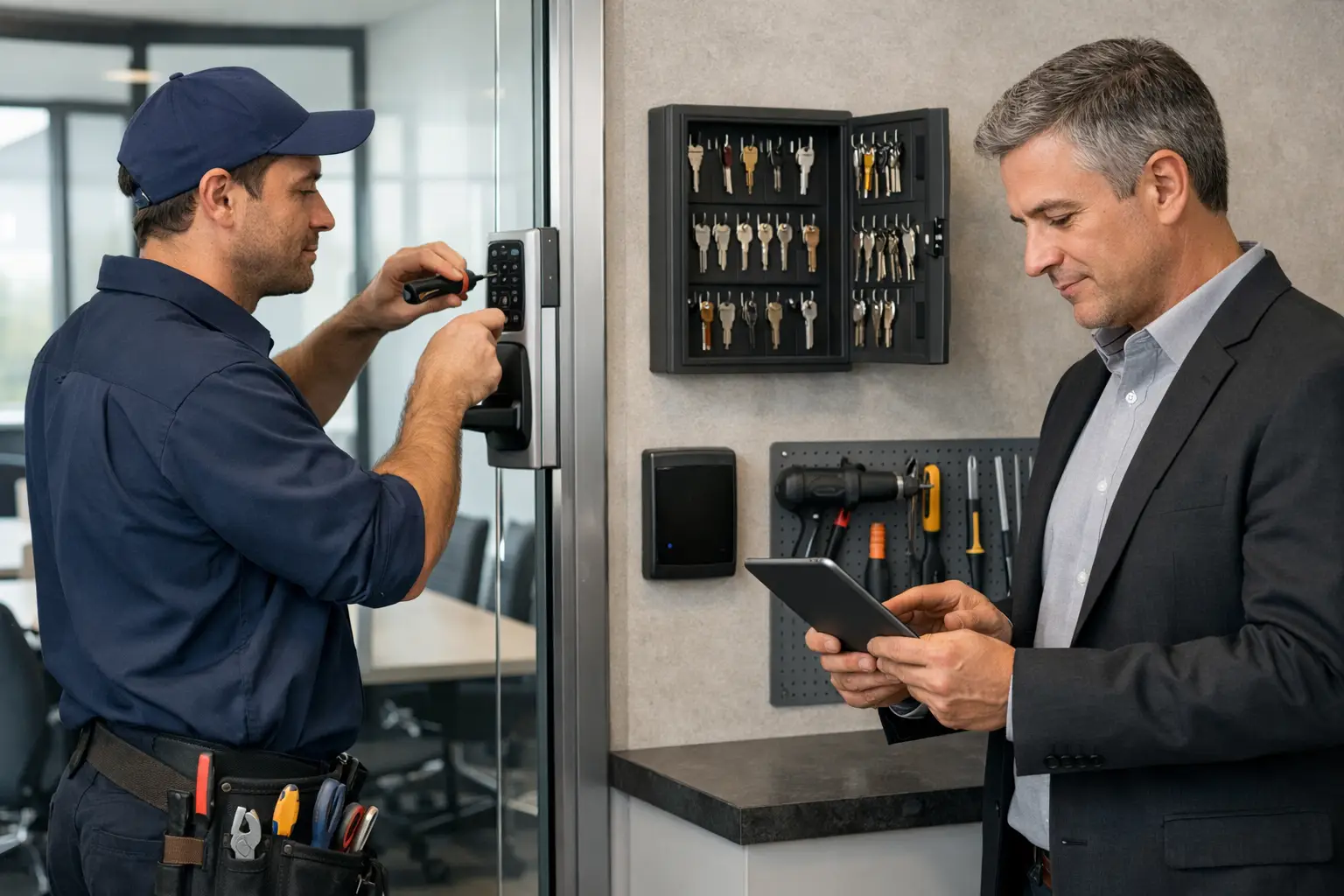
A lost master key, a former employee who still has access, or a front door that no longer latches properly can turn into a business security problem fast. This office lock upgrade guide helps Pittsburgh-area office owners, managers, and landlords make practical decisions before a small weakness becomes an expensive incident.
An office lock upgrade is not always about installing the newest technology. The right solution depends on who needs access, which doors need protection, how often staff changes, and whether your doors and frames are in good condition. A licensed commercial locksmith can assess the complete opening – not just the lock – and recommend a solution that fits your building and budget.
When an Office Lock Upgrade Is Necessary
Some upgrades are planned, such as moving into a new suite or adding employees. Others should happen immediately. Rekey or replace exterior locks after a tenant change, employee termination, lost key ring, break-in attempt, or any situation where you cannot account for every key in circulation.
Mechanical problems also deserve attention. A key that sticks, a lever that sags, a deadbolt that does not extend fully, or a door that must be pulled hard to latch is not just an inconvenience. It can leave the office unsecured after hours or prevent employees from exiting quickly during an emergency.
Older office hardware may no longer match the way your business operates. A single keyed knob on a main entry door provides limited control when several employees, vendors, cleaners, and property managers need access. Likewise, a shared key box may be convenient, but it does not tell you who entered the office or whether a key was copied.
Start With the Doors, Not the Lock Catalog
Before choosing hardware, walk through the office as if you were arriving after hours. Identify the public entrance, employee entrance, rear door, storage rooms, IT closets, records rooms, cash-handling areas, and any door that connects to another tenant space. These locations do not need the same level of control.
Consider who uses each door and when. The front entrance may need convenient employee access during business hours, while the server room should have limited access at all times. A supply closet might only need a durable keyed lever, but a door holding sensitive files could justify restricted keys or electronic credentials.
Also inspect the physical condition of the opening. A high-quality lock cannot compensate for a loose strike plate, weak screws, a warped frame, a damaged closer, or a door that does not align with the latch. The latch must enter the strike fully. On many commercial doors, proper adjustment of the door closer, hinges, latch, and strike makes as much difference as the lock itself.
For exterior doors, look beyond the cylinder. Glass panels near the lock, poor lighting, exposed hinges, and an unprotected rear entrance can all affect security. The goal is to create a dependable system, not install one expensive part on an otherwise vulnerable door.
Office Lock Upgrade Guide: Choose the Right Hardware
For many interior office doors, commercial-grade lever locks are a sensible upgrade from residential-style knobs. Levers are easier to operate, built for more frequent use, and available in functions suited to offices, closets, and private rooms. The correct function matters. A passage lever, privacy lock, storeroom lock, and classroom function lock serve very different purposes.
Exterior doors often need a commercial deadbolt, mortise lock, commercial lever with a properly secured latch, or a panic device depending on the door’s use and code requirements. A storefront aluminum door may need different hardware than a solid wood office door or a steel rear exit. Installing the wrong type can damage the door or create an egress issue.
Rekeying is often the right first step when the existing hardware is in good shape. It changes the key combination so old keys no longer work, usually at a lower cost than replacing every lock. Replacement makes more sense when locks are worn, incompatible with the access plan, visibly damaged, or not rated for the amount of traffic they receive.
A master key system can reduce the number of keys a manager carries. For example, employees may have keys only for their work area while a manager has a key that works on multiple authorized doors. The trade-off is planning. A poorly designed master key system can give too many people access or become difficult to manage after repeated tenant and staffing changes. Keep a controlled record of who receives each key, and recover keys promptly when employment ends.
Restricted keyways offer another level of key control. These keys are harder to duplicate without authorization, which can be useful for offices with frequent staff turnover, property management needs, or sensitive storage areas. They do not replace good key management, but they make unauthorized copies less likely.
When Electronic Access Control Makes Sense
Electronic locks and keypad access can be useful when keys are difficult to track. Instead of rekeying after every personnel change, an authorized manager can remove a former employee’s code, card, fob, or mobile credential. This is especially helpful for offices with multiple shifts, contractors, cleaning crews, or separate departments.
Not every office needs a networked system. A standalone keypad or electronic lever can work well for a small office, private suite, or storage room. Larger offices may benefit from centrally managed access, scheduled entry times, audit records, and multiple credential options. These features add control, but they also require clear administration. Someone must manage permissions, replace batteries where applicable, and maintain records.
Electronic hardware should never create confusion during an emergency. Confirm how the door behaves during a power outage, whether it allows free exit, and whether it complies with the building’s fire and life-safety requirements. On certain doors, especially marked exits, panic hardware and code-compliant egress are not optional. Convenience must never interfere with safe exit.
Do Not Overlook Exit Doors and Panic Hardware
Exit doors deserve careful attention because they protect both people and property. If a door is required for emergency egress, occupants must be able to leave quickly without a key, code, special knowledge, or excessive force. Adding a deadbolt, keypad, or interior locking device without evaluating the door can create a serious safety issue.
Panic bars, also called exit devices, are designed for fast egress on qualifying commercial doors. They can be paired with exterior trim, alarms, delayed-entry solutions where permitted, or electronic access components, but the setup must match the door, occupancy, and local code requirements.
If an exit device is difficult to push, rattles, fails to latch, or has been taped, chained, or modified, schedule service promptly. Temporary workarounds are common after a door problem, but they can create risk for employees and liability for the business. A professional inspection can identify whether the issue is with the panic bar, closer, strike, hinges, frame, or alignment.
Plan the Upgrade Around Daily Operations
A good upgrade should improve security without making normal work harder. Choose a time when access can be controlled, notify employees in advance, and decide who has authority to approve keys, codes, and credentials. For a small office, that may be the owner or office manager. For a multi-tenant property, it may require coordination between the tenant, landlord, and property manager.
Document the system when the work is complete. Keep a secure key log, list active codes or credentials, and note which doors have special hardware. Avoid writing codes on a visible note or storing master keys in an unlocked desk. Review access after staff changes, tenant turnover, and any security concern.
For Pittsburgh offices, weather can also expose door issues over time. Seasonal expansion, moisture, and heavy use can affect alignment. If a lock works only when the door is lifted, slammed, or pushed into the frame, address the door condition before it damages the new hardware.
Get a Professional Assessment Before You Commit
The lowest-priced lock is rarely the lowest-cost answer if it fails early, does not fit the door, or needs to be replaced after a few months of heavy use. Ask for a clear explanation of the recommended hardware, the reason it fits your door, and what work is included. Honest pricing and professional installation matter as much as the lock model.
Arcane Locksmith provides licensed, insured commercial locksmith service for planned upgrades and urgent office door problems throughout Greater Pittsburgh. Whether the immediate need is rekeying after a staffing change, repairing a damaged lock, installing electronic access, or servicing panic hardware, the right response begins with evaluating the actual door and security need.
A safer office does not require changing every lock at once. Start with the doors that protect people, sensitive information, and after-hours entry. Then build a system your team can operate consistently, maintain properly, and trust when the workday ends.