A former tenant moves out. An employee leaves with no plan to return their keys. A contractor has finished work, but you are not sure how many copies were made. In each case, the question is not simply whether the door still locks. It is whether the right people still have access. Rekeying versus master keying comes down to solving that access problem in two very different ways.
Rekeying is usually the fast, practical answer when control has been lost at one door or a small group of doors. Master keying is a planned system for properties where different people need different levels of access. Both are valuable security tools, but choosing the wrong one can create unnecessary cost, complexity, or exposure.
What Rekeying Actually Changes
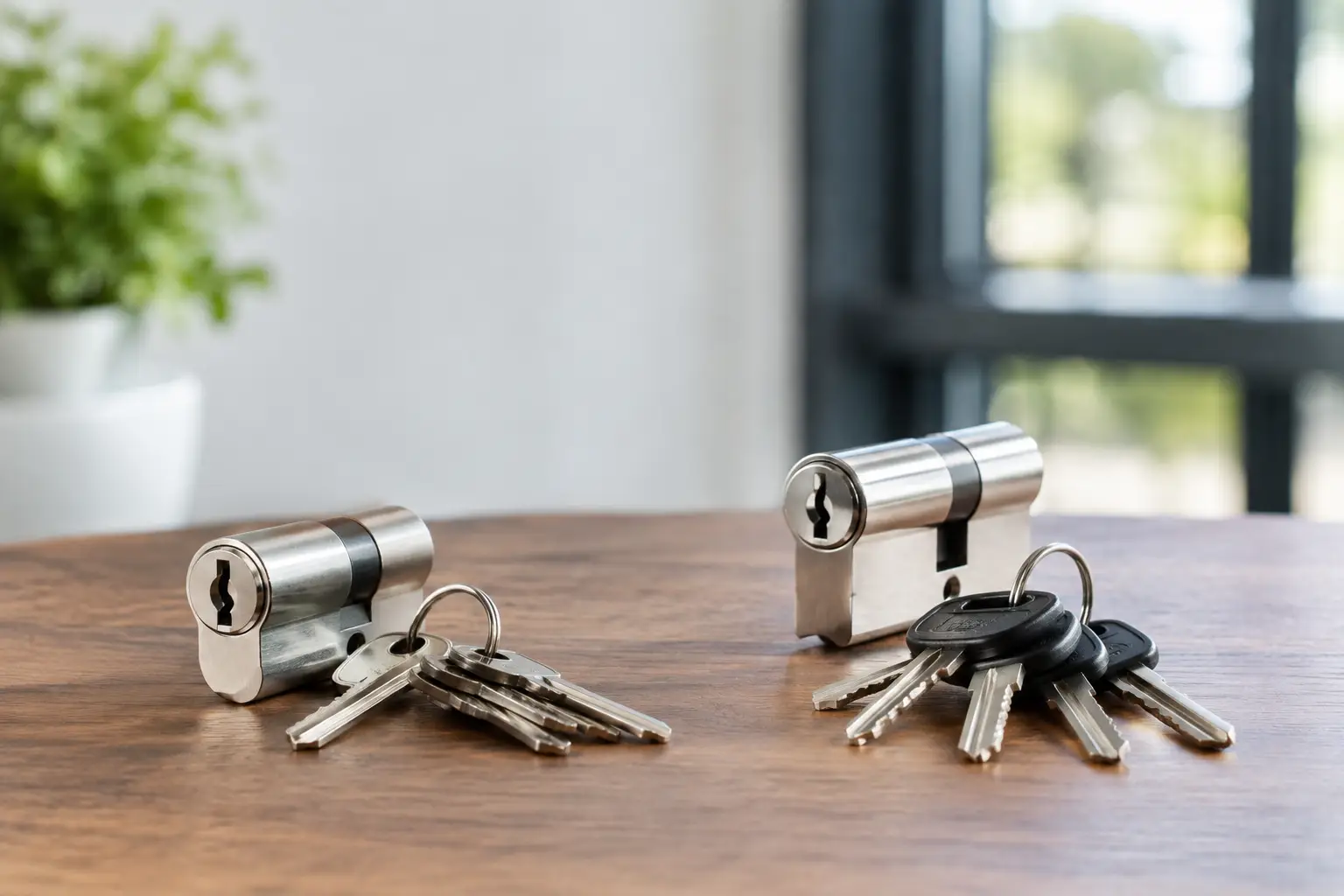
Rekeying changes the internal pin configuration inside an existing lock cylinder so the old key no longer works. The lock hardware stays in place, but it is reset to operate with a new key. When the lock is in good condition and compatible with rekeying, this is often more affordable and less disruptive than replacing the entire lock.
For a homeowner, rekeying is a strong choice after buying a house, losing keys, ending a roommate arrangement, or completing renovations. You may have received keys from a seller, but you cannot know who else has a copy. A rekey gives you a clean start without replacing every piece of door hardware you just paid for.
For landlords and property managers, rekeying between tenants protects the next resident and establishes clear key control. It is also useful after staff turnover, a vendor change, or a key that was never returned. In these situations, the goal is simple: remove access from prior keys as quickly as possible.
Rekeying does have limits. It will not fix a worn-out latch, a loose deadbolt, a damaged door frame, or a lock that has been forced. If the hardware is unreliable or the door does not close correctly, repair or replacement may be the safer recommendation. A professional locksmith should inspect the full door and lock condition before treating rekeying as the whole solution.
What Master Keying Does Differently
A master key system lets multiple keys operate the same lock at different access levels. For example, an office employee may have a key for the front entry and their own suite, while a manager has one master key that opens all suites. A property owner or facilities manager may have a higher-level key for common areas, utility rooms, and individual units.
This works because the cylinders are pinned to recognize more than one key pattern. Each door can still have its own change key for the person assigned to that area, while a master key opens selected doors across the property.
Master keying is best suited to properties with several doors, users, or access zones. Small offices, retail stores, multifamily properties, warehouses, churches, and medical or professional practices often benefit from a well-planned system. The point is not just convenience. It is accountability. Employees do not need keys to every room, and management does not need a heavy ring of unrelated keys to respond to a problem.
A master key system should be designed before the locks are pinned. Adding doors or changing staff access without a plan can turn a useful system into a confusing one. The locksmith needs to know who should access exterior doors, offices, storage areas, mechanical rooms, cash-handling areas, and restricted records or inventory.
Rekeying Versus Master Keying: The Real Difference
The primary difference is purpose. Rekeying removes old access. Master keying organizes current access.
If one former employee has an unreturned key, rekeying the affected doors may be enough. If you operate a building where supervisors, maintenance staff, cleaners, tenants, and vendors need different permissions, a master key system can make daily operations safer and easier to manage.
Cost is another consideration. Rekeying a few existing locks is usually the lower-cost option because it involves less planning and fewer parts. Master keying requires careful key hierarchy design, compatible cylinders, precise pinning, and documentation. It costs more upfront, but it can reduce the long-term hassle of managing many unrelated keys.
Security depends on how the system is controlled, not only on whether it is master keyed. A well-designed master system with limited key distribution can be very secure. But a master key is powerful. If it is lost, copied without authorization, or carried by someone who no longer needs it, the impact can reach multiple doors at once. That is why master keys should be assigned carefully, tracked, and collected immediately when a role changes.
When Rekeying Is the Right Call
Choose rekeying when the main concern is a specific lost, unreturned, or potentially copied key. It is a practical fit for a new home purchase, tenant turnover, a breakup, a misplaced key ring, or a change in household staff.
It also makes sense when you want several existing doors to use one new key. A locksmith can often rekey compatible locks alike, so your front, back, garage, and side doors can work from the same key instead of requiring several. That convenience is useful, but not every lock brand or cylinder type can be matched. A quick inspection prevents surprises.
For Pittsburgh-area rental owners, rekeying can be an efficient part of every turnover checklist. Do it before the new tenant receives keys, not after a concern comes up. Security work is much easier when it is planned than when it becomes an emergency.
When a Master Key System Makes Sense
Master keying is worth considering when a property has regular access needs that cannot be handled safely with one shared key. A small business may need staff to access the front door and their work area, while the owner retains access to the office, supply room, and alarm panel. A multifamily property may need residents to have their own unit keys while maintenance can enter only approved common or service areas.
The best systems follow the principle of least access. Give each person the key authority needed for their job, and no more. A cleaning crew may need access after hours to designated rooms. A shift manager may need exterior and stockroom access. The owner may need access everywhere. Those distinctions should be intentional, not based on whoever happens to have an extra key.
Master keying is not always ideal for a single-family home or a very small office with two doors and two trusted users. In those settings, a fresh rekey and a clear key policy may provide all the control you need without added complexity.
Key Control Is the Part Many Properties Miss
New locks and fresh keys do not solve much if nobody knows who has them. Whether you rekey or install a master system, keep a simple record of key assignments. Note who received each key, which doors it opens, and when it must be returned.
Avoid passing a master key from person to person without documentation. Do not label keys with a property address, unit number, or business name if the key ring could be lost. For higher-risk areas, consider restricted keyways, electronic locks, or smart access options that provide better control over duplication and user changes.
A locksmith can also identify weak points that a keying plan alone cannot address. A quality deadbolt does little if the strike plate is loose, the door frame is split, or the latch does not fully engage. Commercial properties may need panic hardware, closer adjustments, or upgraded access control to keep the entire opening secure and code-conscious.
A Smart Approach for Rentals and Businesses
Many properties need both solutions. A landlord may rekey a unit after each move-out while using a master key system for common areas and maintenance access. A business may rekey after a manager leaves, then revise its master key hierarchy so future access is cleaner and easier to control.
This is where professional planning matters. Changing a few cylinders without reviewing the larger system can leave old master keys active or create doors that no longer fit the intended hierarchy. A licensed and insured locksmith can assess the locks already in place, identify compatible options, and explain the trade-offs before work begins.
If a key is missing or an access issue feels urgent, act on it now rather than waiting for a problem at the door. Arcane Locksmith provides on-site rekeying and commercial keying solutions with honest pricing and careful workmanship. The right choice should leave you with clear access, fewer unknown keys, and confidence about who can get in tomorrow.