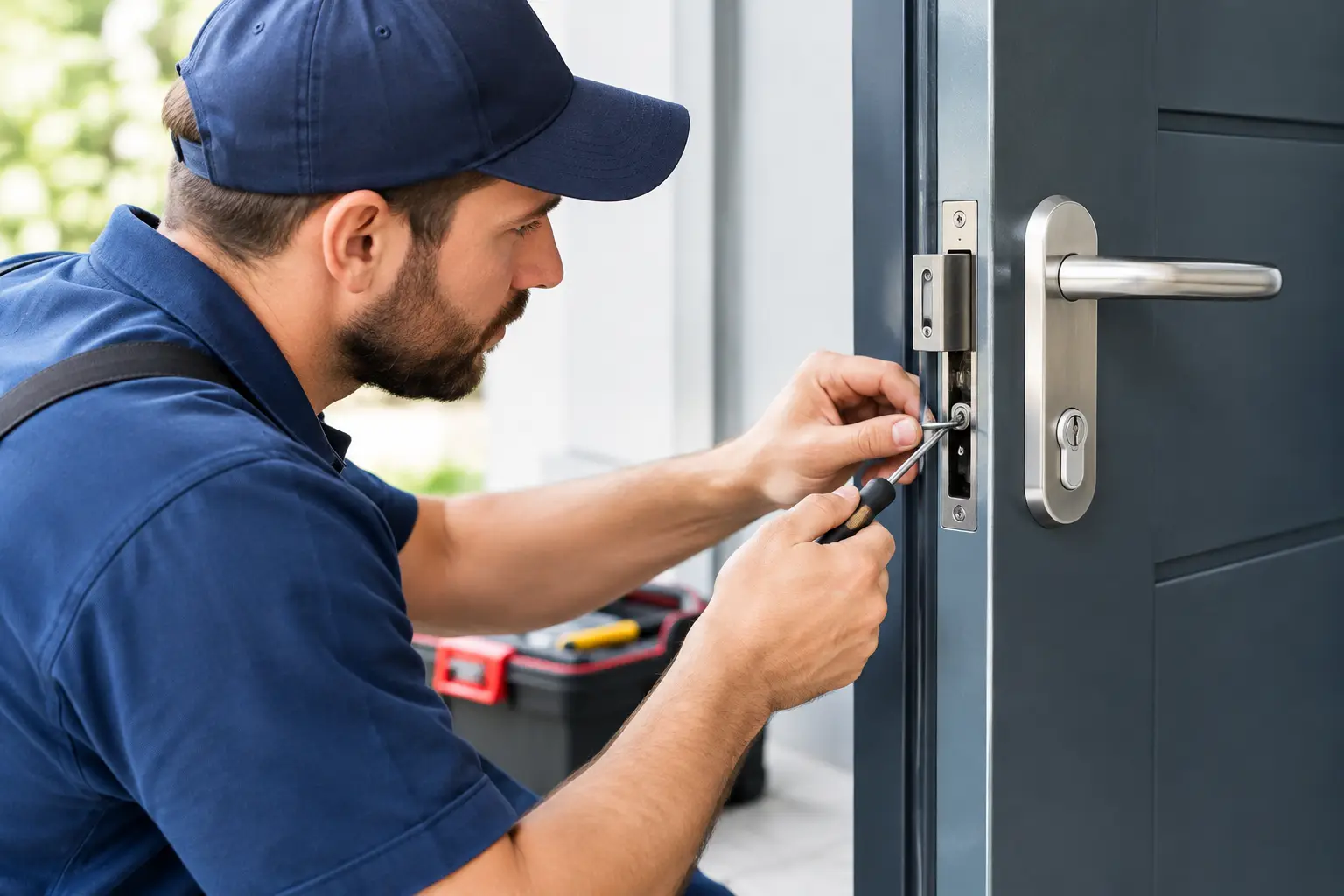
A steel door that will not lock is more than an inconvenience. At a storefront, office, rental unit, or home, it can leave the property unsecured or trap someone outside after hours. Steel door lock repair is often urgent, but the lock itself is not always the real problem. A shifted frame, worn hinges, damaged strike plate, or failing closer can put enough pressure on the hardware to make a good lock feel broken.
The right response is to identify what is binding before forcing the key, lever, or deadbolt. Forcing a lock can turn a repairable issue into a replacement job, especially on commercial steel doors with mortise locks, panic hardware, or electric strikes.
What Makes Steel Door Lock Repair Different?
Steel doors are common at commercial properties because they hold up well under daily use and offer strong security. They are also used on apartment buildings, garages, utility rooms, and side entrances. Their weight and construction, however, create a different set of lock problems than a typical residential wood door.
A steel door can sag slightly over time, particularly when it carries a heavy closer or sees constant foot traffic. Even a small alignment change can prevent a deadbolt from entering the strike cleanly. Temperature changes, building movement, worn hinges, and repeated slamming can all affect how the door meets the frame.
That is why a technician should inspect the complete opening: the lock, latch, cylinder, hinges, frame, strike plate, closer, and door position. Replacing a cylinder without correcting a misaligned door may only provide a short-term fix.
Signs Your Steel Door Lock Needs Attention
A lock rarely fails without warning. The most common early sign is a key that needs to be jiggled, turned hard, or pulled slightly before it works. You may also notice that the latch catches only when you lift or push the door, the deadbolt will not extend unless the door is open, or the lever does not return smoothly.
On commercial doors, a panic bar that sticks, a latch that will not retract, or an electric strike that buzzes without releasing should be treated as a security and safety concern. Do not disable panic hardware or prop open an exterior door as a workaround. That may expose the property to theft and may create a code issue for the building.
Call for professional help promptly if you see any of these problems:
- The key turns but the bolt or latch does not move.
- The door locks only after you force it into position.
- The lock is loose, spinning, or pulling away from the door.
- A key broke off inside the cylinder.
- The lock was damaged during a break-in or attempted break-in.
- An employee, tenant, or former occupant may still have a working key.
For property managers and business owners, a damaged exterior lock should not wait until the next business day. A licensed, insured locksmith can secure the opening, assess the cause, and recommend a repair or replacement that fits the door and the level of use.
Common Causes of Lock Failure on Steel Doors
Door and frame misalignment
This is one of the most frequent causes. If the door has dropped or the frame has shifted, the latch or bolt hits the edge of the strike instead of entering it. You may see scrape marks on the bolt, latch, or strike plate. The lock may operate perfectly with the door open but fail when it is closed.
A minor strike adjustment can sometimes solve the issue. But if the door is sagging, the hinges, closer, frame, or door condition must also be checked. Enlarging the strike opening too aggressively can weaken the security of the door and hide a larger problem.
Worn or damaged lock components
Internal springs, tailpieces, cams, cylinders, and latch mechanisms wear out. Dirt, moisture, and old lubricant can also cause internal components to bind. On frequently used commercial doors, lever handles and mortise cases take substantial stress every day.
A locksmith can determine whether the hardware can be rebuilt or whether replacement is the safer, more cost-effective choice. For an older lock with discontinued parts, replacement may make more sense than repeated service calls.
Incorrect hardware or poor installation
Not every lock is designed for every steel door. Door thickness, backset, handing, fire-rating requirements, and existing prep all matter. A lock that is improperly fitted may work for a while, then begin to bind, loosen, or fail.
This comes up often after an owner installs a residential-grade deadbolt on a busy commercial entrance. The hardware may not be rated for the traffic, door construction, or access requirements. A properly selected commercial lock costs more upfront, but it can reduce downtime and repeated repairs.
Weather, corrosion, and moisture
Exterior steel doors in Western Pennsylvania deal with rain, snow, road salt, and seasonal temperature swings. Moisture can corrode exposed hardware and affect the cylinder or latch. Water entering through damaged weatherstripping may also contribute to rust around the frame and strike area.
Use a dry graphite or lock-specific lubricant sparingly if the keyway feels dry. Avoid spraying heavy oil, grease, or general-purpose penetrating products into the cylinder. They can collect dirt and make the problem worse over time.
What You Can Check Before Calling
If the door is not an emergency exit issue and the property is secure, there are a few safe checks you can make. First, test the lock with the door open. If it works smoothly open but not closed, alignment is likely involved. Look at the strike plate for fresh metal marks or loose screws.
Next, check whether the hinges appear loose and whether the door rubs the frame at the top, bottom, or latch side. On a closer-equipped door, notice whether it slams, drifts, or stops short of fully closing. These observations help a locksmith diagnose the issue faster.
Do not remove a panic bar, drill the lock, hammer the bolt, or force a key that is already bending. Those actions can damage the door, compromise a fire-rated opening, and add unnecessary repair costs. If the key is stuck, stop turning it and call for service before it breaks.
Repair, Rekey, or Replace?
The best solution depends on the condition of the hardware and your security needs. A repair is often appropriate when the lock is good quality, the internal problem is isolated, and compatible parts are available. Adjusting the door and strike may be all that is needed when the lock works correctly off the door.
Rekeying is the right choice when the lock works but key control has changed. Landlords commonly rekey after tenant turnover. Small businesses may rekey after staff changes, lost keys, or a contractor who no longer needs access. Rekeying changes the pins inside the cylinder so old keys no longer work, without necessarily replacing all of the door hardware.
Replacement is usually warranted after severe damage, a break-in, persistent internal failure, obsolete parts, or when the existing lock does not provide adequate security. It can also be an opportunity to move to a restricted key system, keypad lock, electronic access control, or properly rated panic hardware. The trade-off is cost and installation time, but the right upgrade can improve access control and reduce future lockouts.
When It Is an Emergency
Treat the situation as urgent if an exterior door cannot be secured, an employee or tenant is locked out of a necessary space, a key has broken in the lock, or the lock was damaged during a forced-entry attempt. Businesses should also act quickly when a panic device or emergency exit does not function as intended.
For Pittsburgh-area homes and businesses, Arcane Locksmith provides mobile service for lockouts, damaged locks, door alignment concerns, rekeying, and property re-securing. A professional on-site assessment helps prevent the common mistake of replacing a lock when the actual problem is the door, frame, or strike.
A steel door should close, latch, and lock without a fight. If yours needs pressure, force, or repeated attempts, address it while it is still a repair instead of waiting for it to become a lockout or security failure.