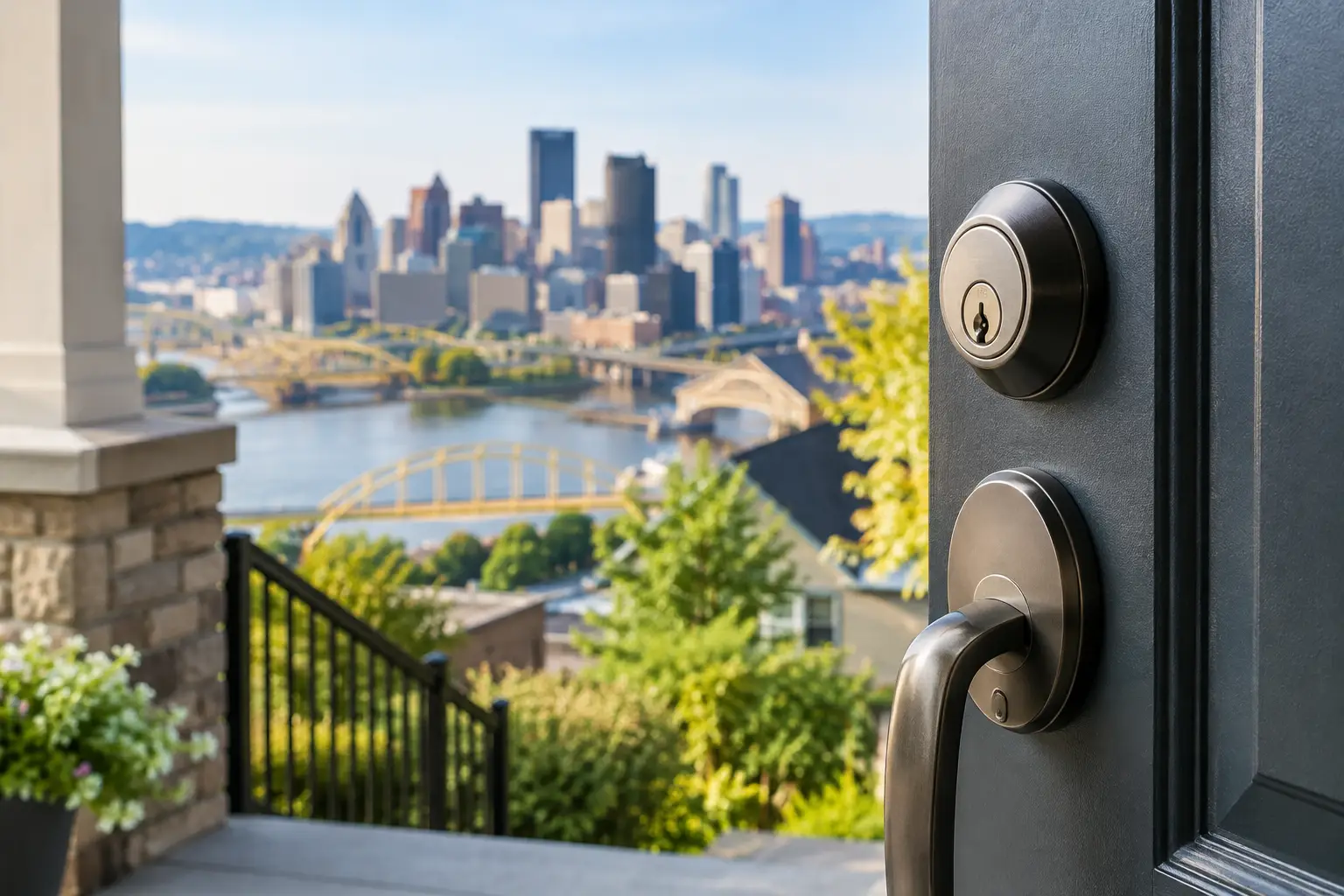
A front door can look secure and still be the weak point of a home. A worn deadbolt, loose strike plate, spare key left in an obvious place, or door frame damaged by moisture can all make forced entry easier. This Pittsburgh homeowner lock security guide focuses on the practical decisions that protect your home without replacing hardware that is still doing its job.
The goal is not to turn your house into a fortress. It is to make the doors, locks, keys, and access habits around your property reliable enough that an intruder has a much harder time getting in and your family can get out safely when needed.
Start With the Door, Not Just the Lock
A quality deadbolt cannot perform properly if the door frame is weak. Begin by closing and locking each exterior door, then check for movement. If the door rattles in the frame, the latch barely reaches the strike plate, or the deadbolt requires lifting, pushing, or pulling the door to lock, there is a problem worth correcting.
Look closely at the strike plate, which is the metal plate on the frame where the bolt enters. Short screws that only grab the trim offer limited resistance. Longer screws secured into the wall framing provide a much stronger connection. The door jamb itself must also be solid. Splintered wood, water damage, old repair work, and visible gaps deserve attention before a new lock is installed.
Pittsburgh-area homes often have older doors and frames that have shifted over time. Seasonal temperature swings and moisture can make a door bind in winter, then sit loose in warmer weather. Do not ignore a lock that works only after you force the door into position. That extra pressure wears out the lock and can leave you locked out at the worst possible time.
Pittsburgh Homeowner Lock Security Guide: Choose the Right Lock
For most exterior hinged doors, a properly installed deadbolt remains the baseline for physical security. A standard spring latch is useful for keeping a door closed, but it should not be the only lock protecting an entry door.
When comparing deadbolts, look for a recognized ANSI/BHMA grade. Grade 1 hardware is generally the strongest residential option, while Grade 2 can be a practical choice for many homes. The right answer depends on the door, the neighborhood, the number of people using the entrance, and whether the hardware will be exposed to heavy weather.
A single-cylinder deadbolt uses a key outside and a thumb turn inside. It is common because residents can exit quickly without searching for a key. A double-cylinder deadbolt requires a key on both sides, which can seem appealing if glass is close to the lock. However, it can create a safety issue during a fire or other emergency. Before choosing one, consider local code requirements and whether everyone in the home could exit quickly.
Smart locks can be a good fit for busy households, rental properties, and homeowners who want to stop handing out physical keys. They allow you to assign codes, remove access when a contractor is finished, and check whether the door is locked. The trade-off is that they need proper installation, battery maintenance, and a backup plan for power loss or electronic failure. Choose a model with a physical key override and keep the mechanical key accessible to a trusted person, not hidden outside.
Rekey or Replace After a Move, Breakup, or Lost Key?
Rekeying changes the internal pins of a compatible lock so old keys no longer work. It is often the most sensible choice after buying a home, moving into a rental, losing track of keys, or ending a relationship where someone may still have access. The exterior hardware stays in place, but you receive a new key pattern.
Replacing the lock makes more sense when the hardware is damaged, outdated, difficult to operate, or no longer provides the level of security you want. Replacement may also be necessary if your locks use different keyways and you want one key to operate several doors.
Do not assume a lock is safe because it came with keys in a sealed package. Previous owners, contractors, cleaners, neighbors, and family members may have had copies made over the years. Rekeying shortly after taking possession of a property is a straightforward way to establish control over who has access.
Keep Better Control of Keys and Codes
Most home security failures are not dramatic break-ins. They are access problems: a missing house key, an old code that still works, a key hidden under a planter, or a garage remote left inside an unlocked vehicle.
Avoid hiding spare keys near the door. Thieves know to check under mats, rocks, decorative signs, mailboxes, and light fixtures. A better option is to leave a spare with a nearby person you trust or use a quality lockbox installed in a discreet location. If you use a keypad lock, give each regular user a separate code rather than sharing one household code. That makes it possible to remove access without resetting everyone else.
Keep a simple record of who has keys. This matters even more for landlords, property managers, and households with dog walkers, caregivers, or frequent service providers. If you cannot account for a key, treat it as lost and rekey the affected locks.
Secure the Doors People Forget
The front door gets attention, but side doors, rear doors, basement entries, attached garages, and doors between a garage and living space are often less secure. Walk the outside of your property after dark and inspect every entrance as if you were seeing it for the first time.
Pay particular attention to these common weak points:
- A rear door with only a knob lock or a loose deadbolt.
- A sliding patio door without a secondary bar or properly working latch.
- A garage service door that has old, low-grade hardware.
- A basement or side entry hidden from street view and poorly lit.
Sliding doors need more than their factory latch. A properly fitted security bar or dowel can help prevent the panel from being forced open. Check the rollers and track as well. If the door does not close squarely, the lock may not fully engage.
For a door leading from an attached garage into the home, use the same standard you would use on the front door. Garage doors can be convenient access points, but they should not be treated as a substitute for a secure entry door.
Fix Problems Before They Become a Lockout
A key that sticks, a deadbolt that turns roughly, or a latch that stops catching is a warning sign. Spraying the lock with the wrong lubricant may attract dirt or leave residue that makes the problem worse. More force is not the answer either. Keys can bend or break inside the cylinder, turning a repair into an urgent service call.
If a lock suddenly becomes difficult to use, check whether the door is misaligned. If the alignment looks normal, the cylinder or internal mechanism may be worn. A licensed locksmith can diagnose whether an adjustment, rekey, repair, or replacement is the better value. Honest service means fixing the actual failure, not automatically selling the most expensive hardware.
Know When to Call for Immediate Help
Some lock problems should not wait. Call for professional assistance when a door will not secure, a key breaks in the lock, a lock is damaged after an attempted break-in, or you are locked out with a child, pet, or vulnerable person inside. If there is an immediate danger, call emergency services first.
After a break-in or attempted entry, avoid repeatedly operating damaged hardware. Take note of visible damage, secure the property, and arrange for the lock and door hardware to be assessed. You may need a rekey, new cylinder, replacement deadbolt, reinforced strike plate, or door repair depending on what was compromised.
For homeowners throughout Greater Pittsburgh, Arcane Locksmith provides licensed, insured mobile service for lockouts, rekeying, damaged locks, and planned residential security upgrades. A professional should explain the available options clearly before work begins and treat your home with the discretion it deserves.
A secure home is built through small, sensible choices: a solid door frame, dependable locks, controlled keys, and quick action when something stops working. Take one exterior door at a time, correct the weak points you find, and you will have a safer home long before an emergency forces the issue.