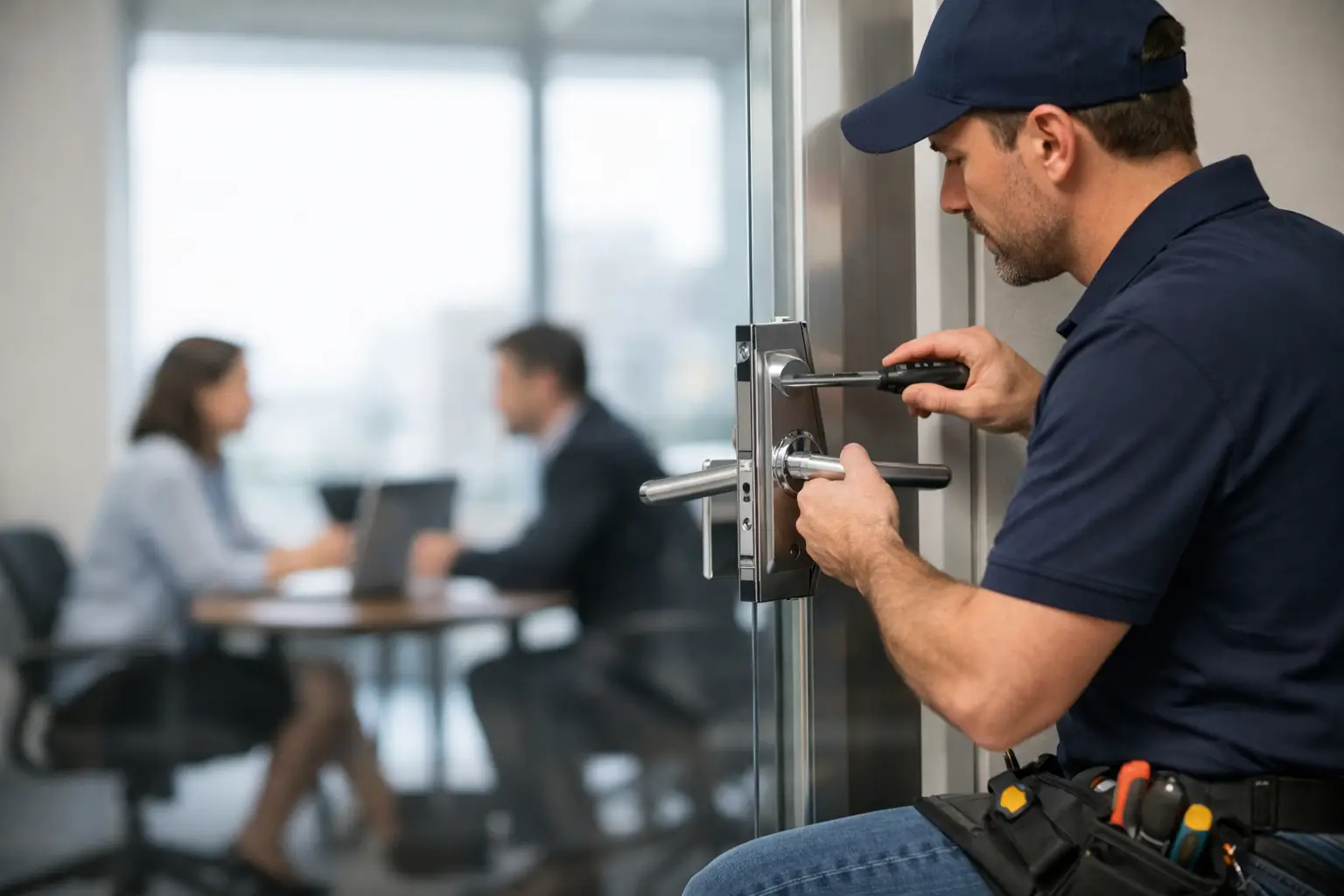
A front office door that will not latch, drags across the floor, or leaves employees fighting with a key is more than an inconvenience. It delays work, frustrates visitors, and can leave your business exposed after hours. When you need office door repair Pittsburgh businesses can rely on, the priority is restoring safe, controlled access without turning a small problem into a security gap.
For office managers, property owners, and small business operators, the right fix depends on what failed. A door may look like a lock problem when the real issue is alignment, worn hinges, a damaged closer, or a failing strike plate. A professional assessment protects the door, the frame, and your budget.
When an Office Door Needs Immediate Repair
Some door issues can wait until a convenient service appointment. Others should be treated as urgent, especially if they affect a primary entrance, an employee-only area, records storage, or any space containing valuable equipment.
A door that will not lock is an immediate security concern. So is a lock that turns without engaging, a deadbolt that cannot extend fully, or a latch that only catches when someone lifts or pulls the door. These problems can make it easy for a door to be forced open or accidentally left unsecured at closing time.
A damaged frame or strike plate deserves prompt attention as well. If the screws are pulling out, the metal around the latch opening is bent, or the frame is splitting, replacing the lock alone will not solve the problem. The hardware needs a solid surface to hold against. Continuing to force a door in this condition can cause more extensive damage and increase repair costs.
Call for urgent service when an exterior office door has been forced, kicked, pried, or damaged during a break-in attempt. The first goal is to secure the opening. Once the property is protected, you can decide whether a repair, lock replacement, rekey, or broader security upgrade makes the most sense.
The Most Common Commercial Door Problems
Office doors work hard. They handle foot traffic, delivery carts, changing temperatures, and frequent opening and closing. Over time, even quality hardware can wear down.
The door will not latch or lock
This is often caused by misalignment between the latch and strike plate. Seasonal movement, loose hinges, building settling, and repeated slamming can shift the door just enough to prevent a clean latch. Sometimes the lock cylinder is worn or the latch mechanism is failing. The repair should address the source of the problem, not just the symptom.
The door drags, sticks, or scrapes
A dragging door may have loose or worn hinges, a warped slab, an issue with the closer, or a threshold problem. In Pittsburgh, weather changes can make a marginal alignment issue more noticeable. Forcing the door can damage the lock and frame, so it is better to have the fit corrected before a simple drag becomes a door that will not close at all.
The door closer slams or will not close
A properly adjusted commercial door closer should bring the door closed in a controlled motion and allow the latch to engage. If it slams, closes too slowly, stops short, leaks fluid, or pulls the door out of alignment, the closer may need adjustment or replacement. This is not just a comfort issue. A door that fails to close reliably can leave an office unsecured.
The key is difficult to turn
A stiff key can point to a worn cylinder, a damaged key, a dirty keyway, or pressure from a misaligned door. Spraying household lubricant into the lock is rarely the best answer. Some products attract dirt and can make the mechanism worse over time. A locksmith can determine whether the lock needs servicing, rekeying, or replacement.
Panic hardware is not working correctly
Panic bars and exit devices are critical life-safety hardware. They must allow occupants to exit quickly while maintaining controlled access from the outside. A loose bar, sticking latch, missing trim, or door that does not re-latch should be repaired promptly. Do not disable or modify panic hardware as a temporary workaround.
Repair, Rekey, or Replace: Making the Right Call
Not every office door problem requires new hardware. Repair is often the practical choice when the door and lock are in good overall condition but need adjustment, a new latch, hinge work, strike reinforcement, or closer service.
Rekeying is useful when the concern is key control rather than a mechanical failure. If an employee leaves without returning a key, a tenant moves out, or your office has too many old keys in circulation, rekeying changes the internal pin configuration so old keys no longer work. It is generally more cost-effective than replacing every lock, provided the existing hardware is in good condition.
Replacement is the better option when a lock is badly worn, damaged by forced entry, incompatible with the door, or no longer provides the level of security your business needs. It may also make sense when you want to move to a restricted keyway, keypad lock, electronic access control, or a smart lock setup that better fits your staff and operating hours.
There are trade-offs. Electronic locks can improve access control and reduce the need for physical keys, but they need proper installation, dependable power or battery management, and a clear plan for user access. Traditional commercial-grade hardware is straightforward and durable, but key control becomes more difficult as staff and vendors change. The best choice depends on the door, your daily traffic, and the security needs of the space.
What a Professional Office Door Repair Visit Should Cover
A proper service call should start with identifying why the door is failing. That means checking the door swing, hinges, frame, latch alignment, strike plate, closer, lock function, and the condition of keys or access hardware. Replacing a cylinder without checking alignment may only postpone the next call.
For a damaged exterior door, the work may include reinforcing the strike area, repairing or replacing hardware, rekeying affected locks, and confirming that the door closes and secures correctly. For an office with multiple entry points, it may also be worth reviewing whether all doors use a consistent key system and whether former employees or vendors could still have access.
A licensed and insured locksmith should explain the issue in plain terms, give honest pricing before major work begins, and treat the property with care. At Arcane Locksmith, the focus is on fast on-site help and professional workmanship, whether you have a jammed office entry door at noon or a lock failure after closing.
Preventing Repeat Door Problems
Most office door failures give warning before they become an emergency. A door that needs a hard pull to latch, a closer that starts slamming, or a key that suddenly feels rough should be checked early. Small adjustments are usually easier than repairs after a latch breaks, a frame cracks, or employees are locked out.
Set a simple maintenance routine for high-use doors. Have staff report sticking, loose handles, missing screws, unusual noises, and doors that do not self-close. Avoid propping open secured doors, even during busy periods. A wedge or improvised hold-open method can damage the closer and defeat the purpose of controlled access.
For property managers and office owners, key control is part of prevention too. Keep an updated record of who has keys, collect them when staff leave, and rekey promptly after a lost key or turnover. If several businesses share a building, make sure tenants understand which doors are common access points and who is responsible for reporting damage.
Office Door Repair in Pittsburgh Without Guesswork
A secure office begins with a door that closes, latches, locks, and allows authorized people to get in without a struggle. If your door is sticking, your closer is failing, or your lock no longer inspires confidence, do not wait for the next lockout or security incident. Get the issue diagnosed while it is still manageable, and keep your team, customers, and property protected.